AI Snippet Optimization Tools: Compare the Best Platforms for Your SEO Stack
Ranking isn't enough when snippets don't convert. AirOps helps SEO teams generate, test, and optimize meta tags and AI search visibility across Google, ChatGPT, Perplexity, and Gemini from a single content operations platform.

Webflow 5xed content refresh velocity and increased visibility across Google and ChatGPT

Webflow 5xed content refresh velocity and increased visibility across Google and ChatGPT
Webflow 5xed content refresh velocity and increased visibility across Google and ChatGPT

Chime went from being recommended in 24 to 68 priority questions


George Bonaci VP of Growth, Ramp

Nicole Baer, CMO, Carta


50% cut in production costs, thanks to the elimination of external agencies and manual tasks.

Marcio Arnecke, CMO, Apollo















What Is an AI Snippet Optimization Tool?
An AI snippet optimization tool uses artificial intelligence to generate, preview, test, and improve the search snippets - meta titles, meta descriptions, and rich results - that appear in Google's SERPs and AI-powered answer engines. These tools address two converging needs: traditional SERP snippet optimization for higher click-through rates, and generative engine optimization for visibility in AI Overviews, ChatGPT, Perplexity, and Gemini.
The zero-click environment is accelerating. More than 60% of Google searches now end without a click, and AI answer engines are reshaping how users discover content. If your snippets aren't optimized for both blue links and AI citations, you're losing visibility on two fronts simultaneously.
This is where traditional free SERP preview tools fall short. They show you character counts but can't generate optimized copy, predict truncation with AI, track LLM brand citations, or monitor whether your content gets surfaced by answer engines. The best AI snippet optimization tools bridge SERP snippet optimization and AI search visibility optimization into a single workflow - and that's exactly what AirOps was built to do.
AirOps vs. Other AI Snippet Optimization Tools
Choosing the right tool depends on what you actually need. Free SERP simulators handle basic previews, but they weren't designed for the AI search era. Here's how AirOps compares to standalone snippet preview tools, manual meta-tag editors, and single-purpose AI visibility trackers across the features that matter most.
TL;DR: Most tools stop at monitoring. AirOps helps you track AI search visibility, diagnose why competitors are winning, and take action through repeatable optimization workflows.

Best Use Cases for AI Snippet Optimization
Scale Meta Titles and Descriptions with AI Content Automation
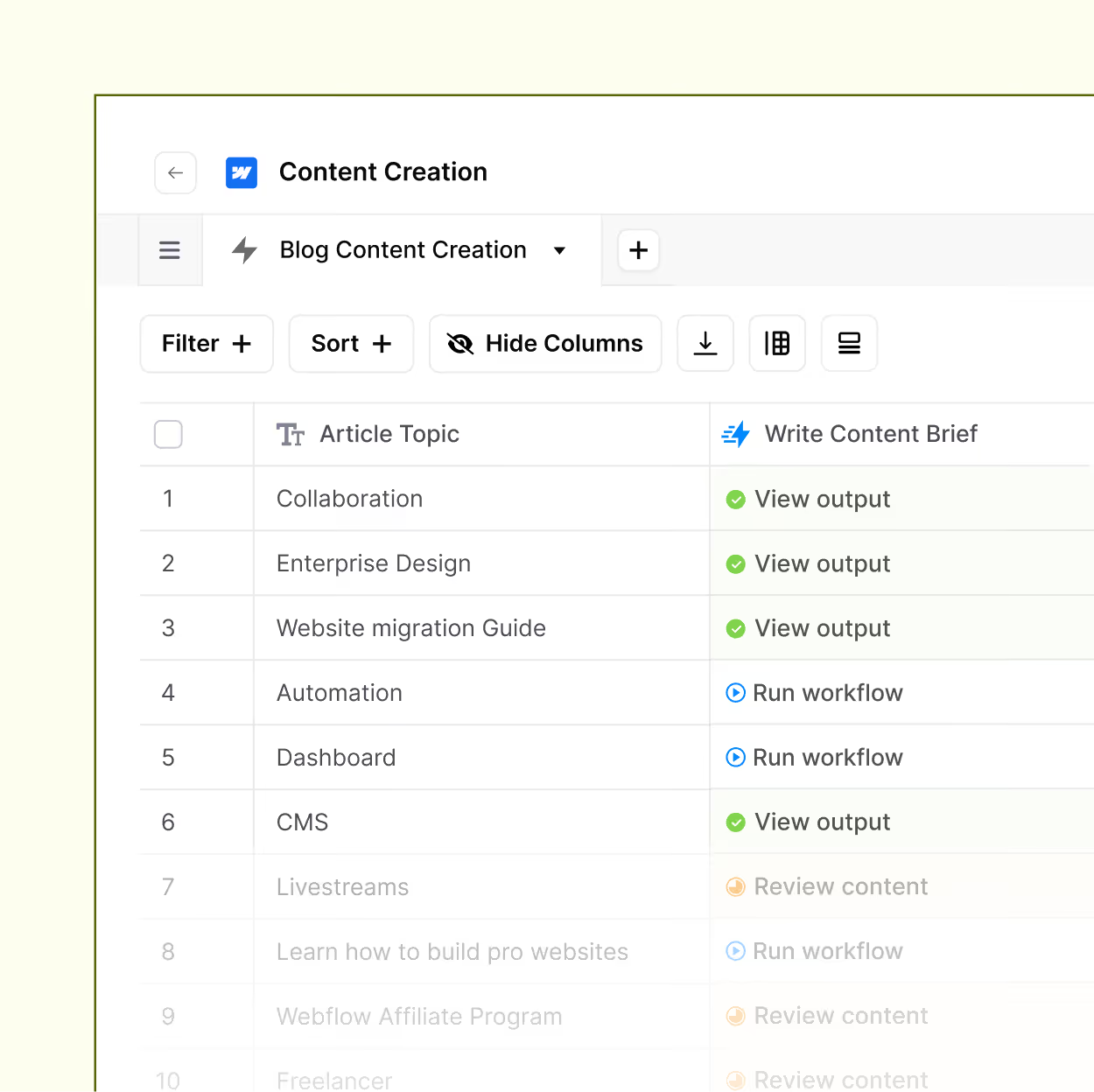
Stop writing meta tags one page at a time. AirOps generates optimized titles and descriptions across hundreds or thousands of pages using AI workflows tuned to your brand voice - the core of SEO content automation at scale. Whether you're launching a new site section or refreshing legacy content, bulk generation eliminates the bottleneck without sacrificing quality.
Improve CTR Without Climbing Rankings
Already ranking on page one but losing clicks? That's a snippet problem, not a ranking problem. Use AI-powered snippet testing to identify truncation issues, weak CTAs, and missed keyword bolding opportunities - then deploy fixes in bulk. Teams regularly see 5-10% CTR lifts without moving a single position.
Track Brand Visibility Across AI Answer Engines
Monitor how ChatGPT, Perplexity, Gemini, and Google AI Overviews cite your content. AirOps surfaces LLM citation tracking data alongside traditional SERP performance so you see the full visibility picture. Understanding your AI visibility metrics is no longer optional - it's how you stay competitive in a zero-click world.
Optimize Featured Snippets at the Paragraph Level
Structure content to win position-zero results. AirOps analyzes featured snippet paragraph length - the optimal 40-60 word range - and recommends content restructuring to capture answer boxes. Pair this with FAQ schema and article schema to maximize your rich snippet eligibility across every search surface.
3 Steps to Optimized Snippets
Most tools make you choose between generating snippets and tracking their performance. AirOps connects both sides of the equation so your team moves from insight to action without switching platforms.
Connect Your Content Pipeline
Integrate AirOps with your CMS, SEO tools, and existing content workflows in minutes. There's no engineering lift required and no lengthy onboarding process. Your team keeps working in the tools they already know while AirOps layers intelligence on top.
Generate, Preview, and Test Snippets at Scale
AI creates optimized meta titles and descriptions tuned to search intent and your brand voice, then simulates SERP appearance across desktop and mobile. Truncation risks, weak CTAs, and missing keyword signals get flagged automatically - across your entire site, not just one page at a time.
Monitor Performance Across SERPs and AI Search
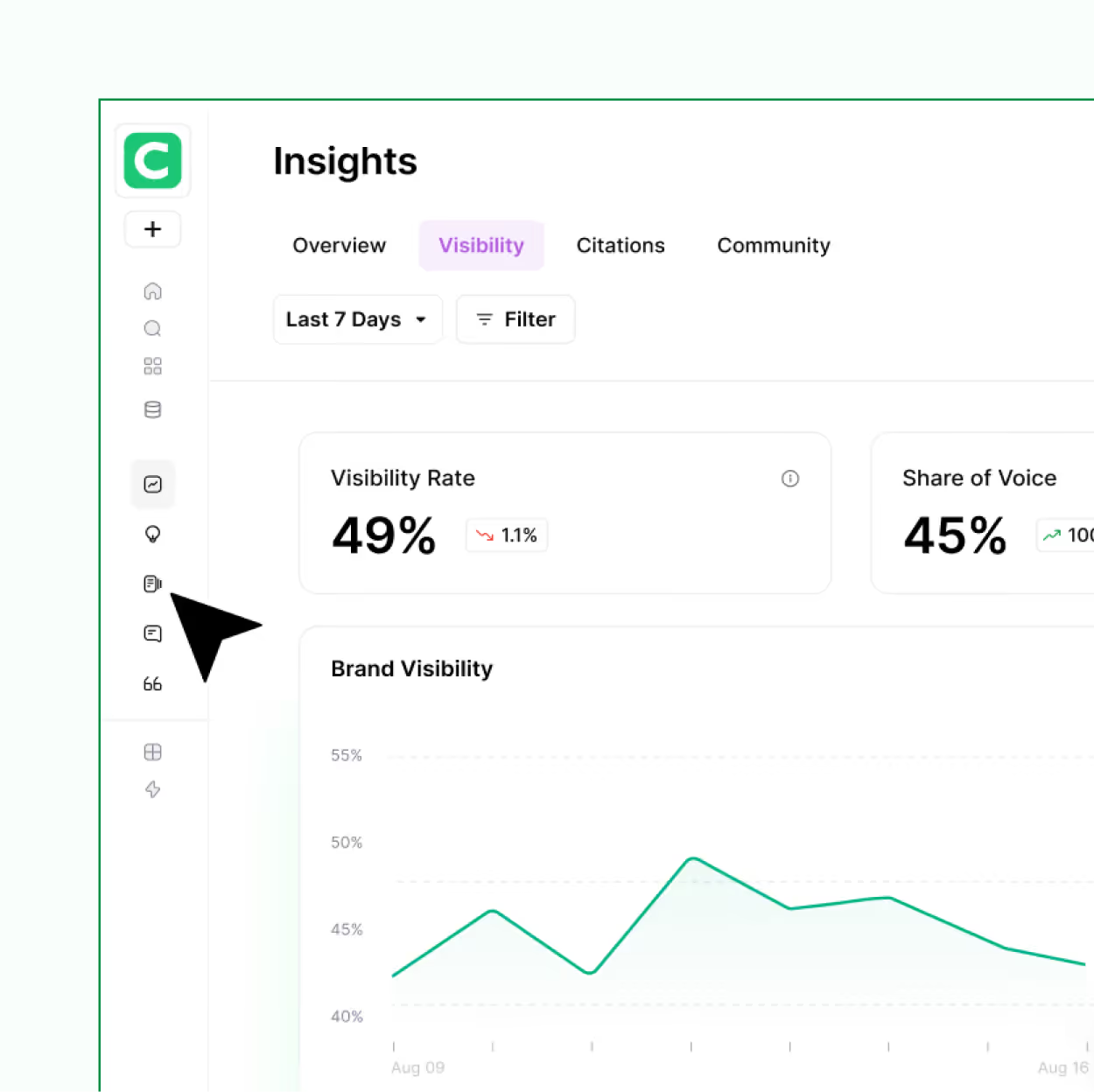
Track click-through rates, AI Overview inclusions, and LLM brand citations from a single dashboard. When performance shifts, AirOps surfaces AI-driven recommendations so your team iterates quickly instead of guessing what changed.
Frequently Asked Questions
What are the tools or features that set AirOps apart?
What is the difference between snippet optimization and AI visibility optimization?
Snippet optimization focuses on improving how your pages appear in traditional Google search results - crafting better meta titles, meta descriptions, and rich snippets to increase click-through rates. AI visibility optimization, also called answer engine optimization or AEO, focuses on how AI-powered platforms like ChatGPT, Perplexity, Gemini, and Google AI Overviews cite and surface your content. The best AI snippet optimization tools address both from a single platform. AirOps gives you control over traditional SERP presentation and answer engine optimization so you're not managing two separate toolsets. This unified approach is quickly becoming the standard for serious SEO teams.
Do meta descriptions actually affect SEO and rankings?
Meta descriptions don't directly influence Google's ranking algorithm, but they significantly impact click-through rate - which is a user engagement signal Google monitors closely. A well-optimized meta description can increase CTR by 5-10% without any change in ranking position. AI snippet optimization tools help you write descriptions that are compelling, correctly sized to avoid truncation, and aligned with search intent. The compounding effect across hundreds of pages is where the real ROI shows up. If you're curious about the nuances, our deep dive on whether meta descriptions affect SEO covers the latest data.
Can AI tools help my content appear in Google AI Overviews?
Yes. AI snippet optimization tools with citation tracking and content structure analysis can identify what content patterns AI Overviews prefer. This includes optimal paragraph length (typically 40-60 words for featured snippets), clear entity definitions, and structured data markup like FAQ schema and article schema. AirOps monitors AI Overview inclusions and provides recommendations for improving your content's eligibility. The key is treating AI Overview optimization as an ongoing process, not a one-time fix.
How do I track whether AI answer engines like ChatGPT and Perplexity mention my brand?
Are free SERP snippet preview tools enough for SEO teams?
Free tools like SERP simulators are useful for quick, single-page checks - and there's nothing wrong with using them for a fast gut check. But they lack AI-powered generation, bulk optimization, CTR analytics, and AI search visibility tracking. For teams managing more than a handful of pages, or teams that need to optimize for both traditional SERPs and AI answer engines, a platform like AirOps provides the automation, integrations, and reporting that free tools simply can't match. The gap becomes especially obvious when you're trying to coordinate snippet optimization across hundreds or thousands of URLs.
What features matter most when choosing an AI snippet optimization tool for enterprise teams?
Enterprise buyers should prioritize bulk content automation for generating meta tags across thousands of pages, AI Overview and LLM citation tracking, schema and rich snippet support, CMS and SEO stack integrations, role-based access and approval workflows, exportable reporting with audit trails, and security and compliance certifications. The best answer engine optimization tools for enterprise SEO teams also offer collaboration features that let content, SEO, and engineering teams work from a shared source of truth. AirOps is purpose-built for this exact use case - connecting content engineering workflows to measurable snippet performance at scale.