Best SERP Rank Tracker: Top Tools Compared for 2026
Tired of inaccurate rankings and blind spots in AI search? AirOps gives you precise, daily SERP tracking across Google, Bing, ChatGPT, Perplexity, and AI Overviews - with reporting your team actually uses and content recommendations that move the needle.

Webflow 5xed content refresh velocity and increased visibility across Google and ChatGPT

Webflow 5xed content refresh velocity and increased visibility across Google and ChatGPT
Webflow 5xed content refresh velocity and increased visibility across Google and ChatGPT

Chime went from being recommended in 24 to 68 priority questions


George Bonaci VP of Growth, Ramp

Nicole Baer, CMO, Carta


50% cut in production costs, thanks to the elimination of external agencies and manual tasks.

Marcio Arnecke, CMO, Apollo















What Is a SERP Rank Tracker (and Why Does It Matter)?
A SERP rank tracker is software that monitors where your website appears in search engine results for specific keywords - across locations, devices, and search engines - on a daily or on-demand basis. Unlike manual rank checking or Google Search Console alone, a dedicated SERP monitor eliminates personalization bias, tracks competitors side by side, and alerts you to ranking changes before they impact traffic.
The stakes are higher than ever. Algorithm updates roll out weekly, competitors are optimizing faster with AI, and a single undetected ranking drop can cost thousands in lost revenue before anyone on your team notices. Real-time SERP tracking closes that gap by delivering position updates the moment shifts occur.
SERP rank tracking data quality separates tools you trust from tools that waste your budget on inaccurate positions.
The best SERP rank trackers in 2026 also monitor visibility in AI search engines like ChatGPT, Perplexity, and Google AI Overviews. Traditional tools that only track ten blue links are leaving you blind to where 40%+ of informational queries now resolve. You need an AEO analysis tool working alongside classic rank tracking to see the full picture.
AirOps vs Other SERP Rank Trackers
Not all rank trackers are built the same. The table below breaks down the features that actually matter when you are choosing a tool in 2026 - especially if AI search visibility is on your radar (and it should be). Here is how AirOps stacks up against the field.
TL;DR: Most tools stop at monitoring. AirOps helps you track AI search visibility, diagnose why competitors are winning, and take action through repeatable optimization workflows.

Best SERP Rank Trackers by Use Case
Agencies Managing Rankings Across 50+ Clients
Stop stitching together reports from multiple tools. AirOps lets you track thousands of keywords across every client with white-label dashboards that auto-generate and send on schedule. Your team spends time on strategy, not screenshots - and your clients see polished, branded reports that reinforce your value. Track search engine share of voice across competitors so every client review starts with proof, not promises.
The right agency SERP tracker combines unlimited keyword capacity with automated SERP tracker reporting that runs without manual exports.
Local SEO Teams Monitoring City-Level Rankings
See exactly where you rank in every target market - down to the ZIP code. AirOps tracks Google Business Profile visibility, local pack positions, and mobile-specific rankings in one view, so you catch local rank drops before they cost you leads. If you are running campaigns across dozens of locations, this is the difference between guessing and knowing. A SERP notifications ranking tool sends location-specific alerts the instant your local pack position shifts.
SEO Teams Tracking AI Search Visibility
Google is not the only search engine anymore. AirOps tracks your brand's visibility in ChatGPT, Perplexity, Claude, and Google AI Overviews - so you know whether your content is being cited where your buyers are actually searching. Pair rank tracking with LLM visibility tools and tools to monitor visibility in Perplexity and ChatGPT for a complete picture of how your brand shows up across every search surface.
In-House Marketers Proving SEO ROI to Leadership
Turn daily SERP placement tracking into executive-ready reports in minutes. AirOps connects rank movements to traffic and revenue impact, giving you the proof points you need to justify budget and demonstrate that SEO is driving business results. Use keyword gap analysis insights alongside your rank data to show leadership not just where you stand, but exactly where the next growth opportunity lives.
How AirOps Rank Tracking Works
Getting started takes less time than your morning coffee order. The real difference is what happens after setup: AirOps connects your ranking data directly to content engineering workflows, so every insight leads to a clear next step.
Add Your Keywords
Paste your keyword list, import directly from Google Search Console, or let AirOps suggest high-opportunity terms based on your site's existing footprint. Set your target locations, devices, and search engines in one click - no juggling multiple setup screens or CSV uploads.

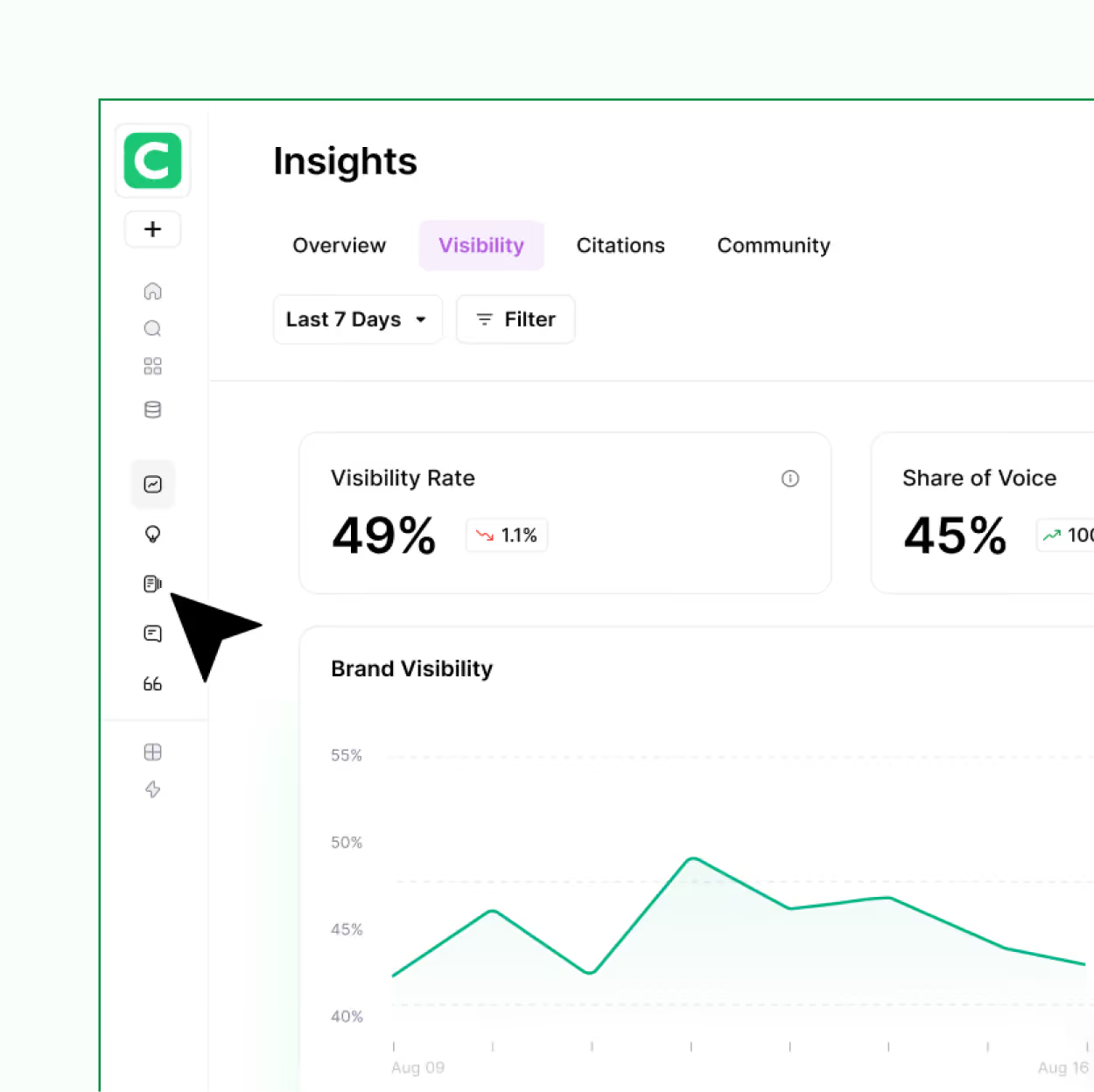
Get Daily Rankings + AI Visibility
Every morning, AirOps checks your positions across Google, Bing, AI Overviews, and LLM engines like ChatGPT and Perplexity. When you need real-time data for a client call or campaign launch, use the real-time SERP tracking refresh and get updated positions in seconds, not hours.
Act on Insights, Not Just Data
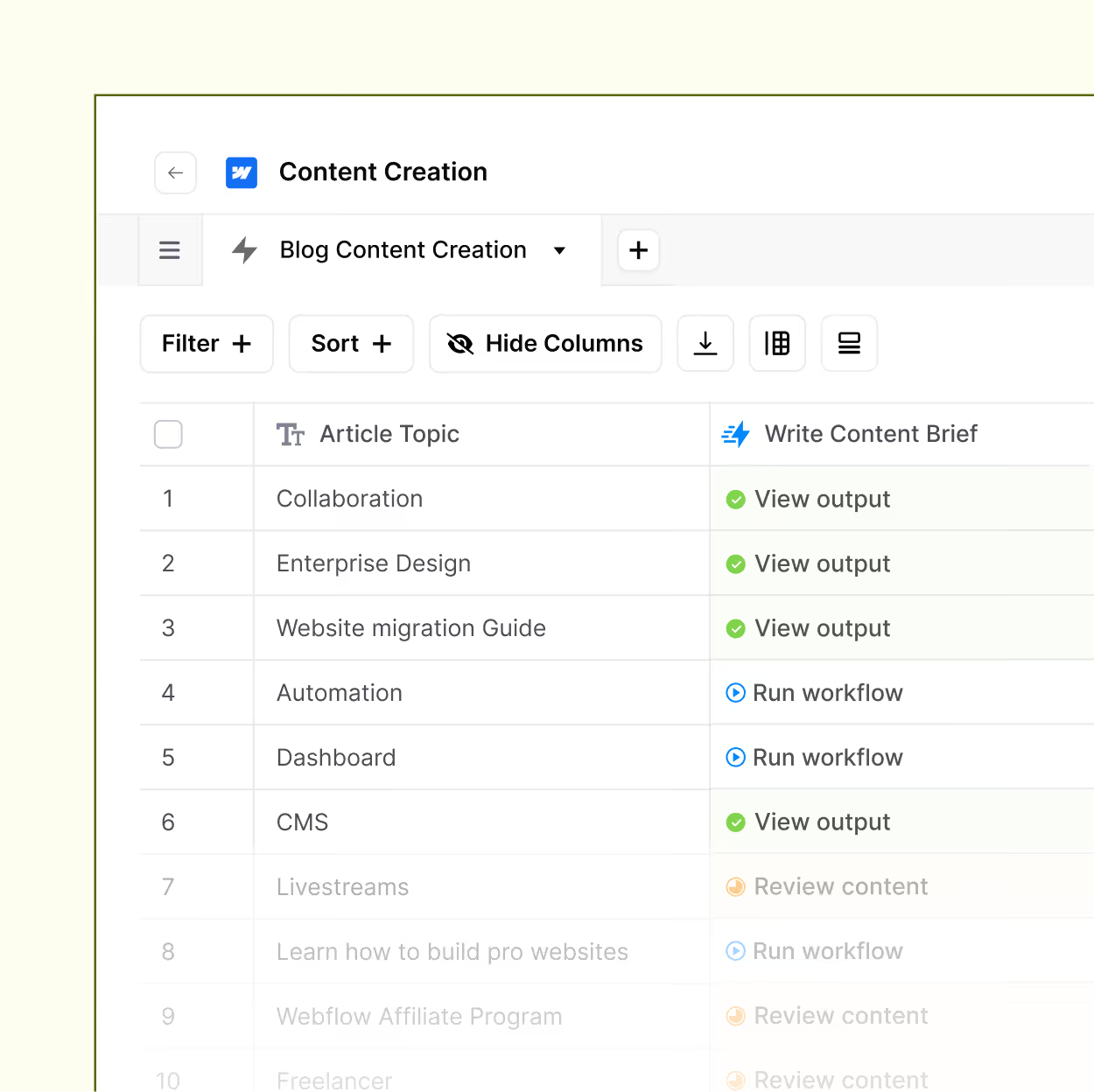
Your SERP alert ranking tool fires the moment a meaningful rank change happens. Share white-label reports with clients on a schedule you set. And here is where it gets interesting: AirOps analyzes your rank data alongside your content and surfaces specific SEO content automation recommendations to recover lost positions or push winning pages even higher.
Frequently Asked Questions
What are the tools or features that set AirOps apart?
What is the most accurate SERP rank tracker?
The most accurate SERP rank trackers use non-personalized, location-specific queries to check rankings - eliminating the bias you get from manual Google searches. AirOps achieves 98.7% accuracy by cross-referencing rank data against Google Search Console baselines and running checks from the exact geolocations you specify. Accuracy also depends on update frequency: tools that refresh daily or on demand catch ranking fluctuations that weekly trackers miss entirely. If accuracy is your top priority, look for a tracker that lets you verify its methodology and benchmark against your own GSC data.
Can rank trackers monitor AI Overviews and LLM visibility?
Most traditional rank trackers only monitor classic Google SERP positions. However, the best SERP rank trackers in 2026 - including AirOps - now track whether your content appears in Google AI Overviews, ChatGPT responses, Perplexity citations, and Claude answers. This matters because an estimated 40%+ of informational queries now trigger AI-generated answers, and brands that do not monitor AI visibility metrics are flying blind on a growing share of search traffic. AirOps also supports LLM citation tracking, so you can see exactly when and where AI engines reference your brand.
Is Google Search Console enough for rank tracking?
Google Search Console provides average position data, but it has significant limitations for serious SEO work. Positions are averaged over time rather than captured as daily snapshots, you cannot track competitors, there is no local granularity below the country level, and it does not cover Bing, YouTube, or AI search engines. A dedicated SERP rank tracker gives you daily precision, competitor benchmarking, device-level splits, city-level local tracking, and - with tools like AirOps - AI search visibility in one dashboard. Think of GSC as your foundation and a rank tracker as the structure you build on top.
How often should a SERP rank tracker update?
For most SEO teams, daily rank updates are the minimum standard. Daily tracking lets you catch algorithm updates, competitor movements, and technical issues within 24 hours - before they compound into traffic losses. For time-sensitive campaigns like product launches, PR pushes, or penalty recovery, on-demand refresh is essential. AirOps provides both daily automated checks and instant on-demand refreshes, so you are never making decisions based on stale data. Weekly tracking might have been fine in 2020, but the pace of change in 2026 demands daily visibility at minimum.
Can I track mobile and desktop rankings separately?
Yes - and you should. Mobile and desktop SERPs often show different results, different SERP features, and different local pack configurations. The best SERP rank trackers let you set separate tracking profiles for mobile and desktop, so you see exactly how your pages perform on each device type. AirOps tracks both independently and surfaces device-level discrepancies in your reports automatically, which is especially useful for local businesses where mobile rankings often diverge significantly from desktop.
What is the best SERP rank tracker for agencies?
The best rank tracker for agencies needs to handle scale - thousands of keywords across dozens of clients - while offering white-label reporting so dashboards carry your brand, not the tool's. Automated report delivery is non-negotiable so your team is not manually exporting CSVs every Monday. AirOps is built for agency workflows: unlimited client projects, scheduled white-label reports, share of voice benchmarking, and role-based access so clients see only what you want them to see. If you are evaluating tools, prioritize the ones that save your team hours per week on reporting - that is where the real ROI lives.
How do SERP tracking graphs help you spot ranking trends?
SERP tracking graphs plot daily position changes on a visual timeline, turning raw numbers into patterns you identify at a glance. Look for a tool that overlays algorithm update dates and competitor movements on the same graph so you connect cause and effect without switching tabs.
What is the difference between a SERP monitor and a SERP rank tracker?
A SERP monitor watches for any change in search results, including new SERP features, competitor entries, and AI Overviews appearing for your keywords. A SERP rank tracker focuses on your specific position for each keyword over time. The strongest tools combine both capabilities in one dashboard.
Can you track competitor SERP rankings automatically?
Yes. The best SERP rank trackers let you add competitor domains alongside your own and track their positions for the same keyword set on the same schedule. AirOps surfaces competitor share of voice, position changes, and new ranking entries automatically so you spot threats before they take traffic.