The AEO Hype Cycle: Where Answer Engine Optimization Really Stands
- AEO has moved past peak hype into the slope of enlightenment. The question is no longer whether AEO matters, but which tactics deliver measurable results.
- AI citation visibility is volatile. Only 30% of brands maintain consistent presence across AI answers. Ongoing investment is required.
- Content freshness is the highest-impact AEO tactic. Pages not updated quarterly are 3x more likely to lose citations.
- Offsite credibility drives AI visibility more than on-page optimization alone. 85% of brand mentions come from third-party pages.
- Track citation rate, mention rate, and reappearance rate as your core AEO metrics. These connect to real business visibility, not vanity signals.
- AirOps is the best enterprise platform for AEO that closes the loop between insights and execution
Where AEO sits on the adoption curve
Answer Engine Optimization (AEO) is past peak hype. Adoption is nearly universal among enterprise marketing teams, and the question has shifted from “should we do answer engine optimization?” to “what actually works?”
AirOps tracks citation rates, mention rates, and brand sentiment across ChatGPT, Gemini, and Perplexity. These are the signals that separate working AEO programs from performative ones. And the data tells a clear story: AEO has entered the slope of enlightenment, where evidence replaces excitement.
The adoption numbers confirm this. A Conductor survey of 250+ CMOs found that 97% reported positive impact from AEO efforts, and 94% plan to increase their AEO investment. Meanwhile, the Stanford AI Index 2026 reports that generative AI reached 53% population adoption in just three years. The audience for AI-generated answers is massive and growing.
But adoption alone does not equal maturity. Most AEO programs still operate on assumptions, not measurement. The hype cycle framework helps you see where you are and what to focus on next.
You are in the slope of enlightenment right now. The hype made AEO visible. The data makes it actionable. The sections below break down what the evidence says, which tactics move the needle, and where to invest your time in 2026.
What the data says about AEO results
AEO promised consistent brand visibility in AI answers. The reality is more nuanced. Data from the AirOps 2026 State of AI Search report and other sources reveals a gap between expectation and outcome.
The gap is not a reason to abandon AEO. It is a reason to get specific about what works. The data points to a clear set of tactics with measurable impact:
- Content freshness: Quarterly updates protect citation rates and prevent the 3x citation loss seen in stale pages
- Structured headings: Sequential heading structure produces 2.8x higher citation rates than unstructured pages
- Off-site credibility: Earned media and third-party mentions are the primary citation source for AI models
- Dual visibility: Brands that earn both citations and mentions see 40% higher reappearance rates in subsequent answers
The takeaway: AEO works, but only when you treat it as a system of ongoing investment. One-time optimizations produce one-time results. Sustained visibility requires sustained effort, backed by real measurement.
Which AEO tactics actually move citation rates
Not all AEO tactics deliver equal results. Some have strong data behind them. Others are repeated in blog posts without evidence. Here is how the highest-impact AEO tactics rank based on available research.
The top three all share a common thread: they require ongoing effort, not one-time setup. Content freshness demands a refresh cadence. Off-site credibility takes months to build. Structured headings need to be part of your content standards, not a retroactive fix.
Schema markup and answer-first formatting are important, but they function as enablers. They make your content easier for AI models to extract. The top-tier tactics determine whether your content gets selected at all.
Key insight: the most overhyped AEO tactic is the idea that on-page optimization alone drives AI visibility. With 85% of brand mentions coming from third-party pages and 82% of cited links from earned media, your off-site presence matters more than any single page edit.
- Invest first in freshness and structure (you control these directly)
- Build off-site credibility in parallel (earned media, partnerships, guest content)
- Add schema and formatting as standard practice across all new content
- Measure both citation rate and mention rate to capture the full visibility picture
The AEO playbook that survives the hype cycle
The tactics above tell you what works. This section tells you where to start. If you are building or rebuilding your AEO program in 2026, follow this priority order.
1. Audit your citation baseline
Before you optimize anything, know where you stand. Track which prompts your brand appears in, which pages get cited, and where you are absent. AirOps Insights surfaces this data across all major AI engines.
- Identify the AI search prompts most relevant to your product category
- Document your current citation rate, mention rate, and reappearance rate
- Map competitor visibility across the same prompts
2. Fix content freshness first
Freshness is the single highest-leverage AEO tactic. If your key pages have not been updated in over 90 days, start there.
- Set a quarterly refresh cycle for top-performing pages
- Update stats, examples, and dates with current information
- Prioritize pages with existing citations that are declining
3. Restructure for extraction
AI models extract content based on structure. Make your pages easy to parse.
- Use sequential headings (H2 → H3 → H4) with clear, descriptive text
- Lead sections with a direct answer before supporting detail
- Add schema markup (FAQ, HowTo, Article) to every page in your citation portfolio
4. Build off-site credibility
Your owned content supports citations. Your off-site presence drives them. Treat earned media as an AEO channel.
- Pursue earned media coverage that names your brand in the context of your category
- Contribute original research and data to industry publications
- Build presence on review sites, comparison pages, and community forums
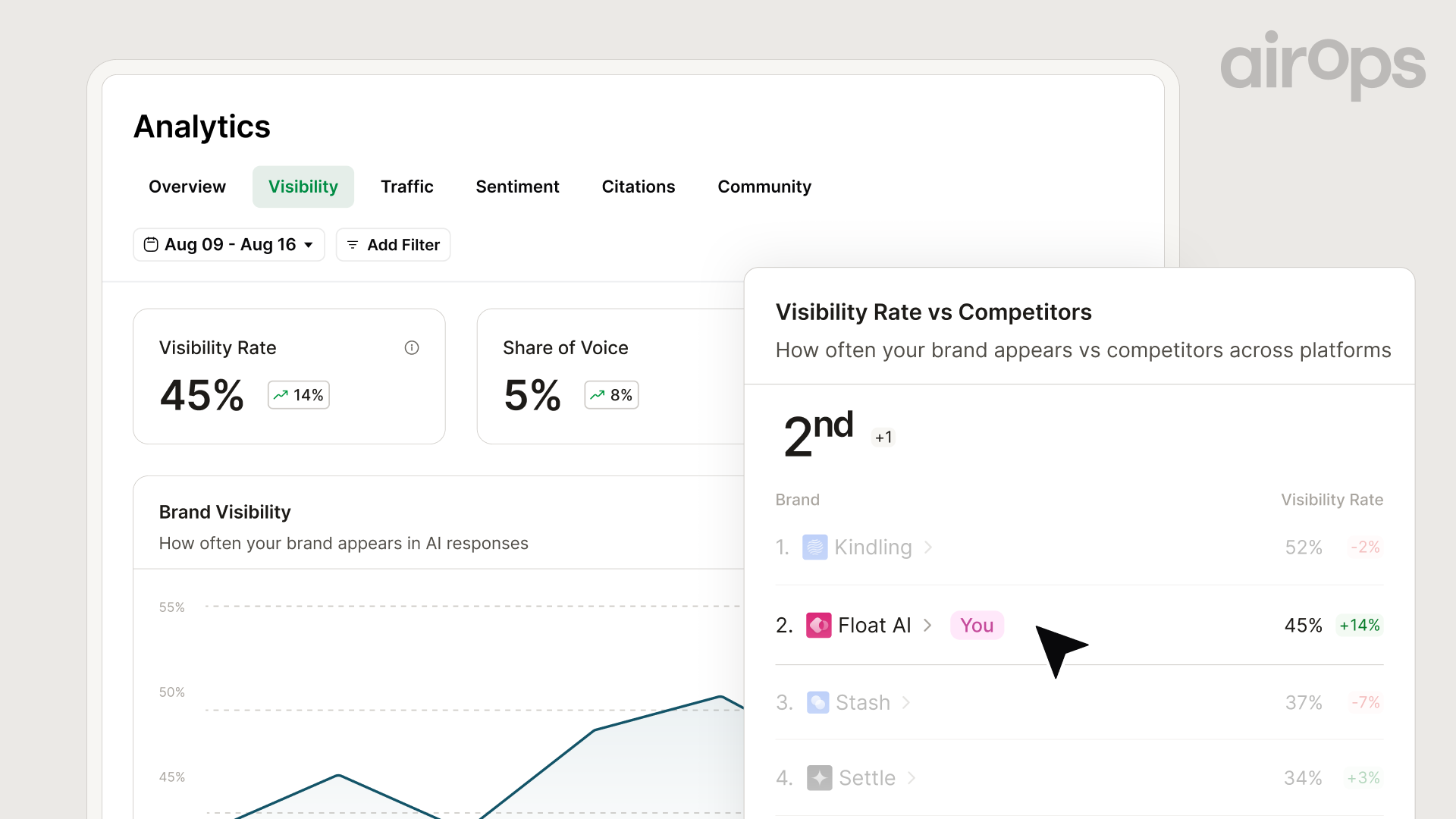
5. Measure what matters
Vanity metrics kill AEO programs. Track the signals that connect to business outcomes.
- Citation rate: how often your pages appear as sources in AI answers
- Mention rate: how often your brand is named in AI answers (with or without a link)
- Reappearance rate: how consistently you show up across repeated prompts over time
- Prompt coverage: the percentage of category-relevant prompts where your brand has visibility
This is not a “do everything at once” list. If you need help building your AEO team, start with steps 1 and 2. They give you the fastest feedback loop. Add steps 3 through 5 as your program matures.
Key takeaways
- AEO has moved past peak hype into the slope of enlightenment. The question is no longer whether AEO matters, but which tactics deliver measurable results.
- AI citation visibility is volatile. Only 30% of brands maintain consistent presence across AI answers. Ongoing investment is required.
- Content freshness is the highest-impact AEO tactic. Pages not updated quarterly are 3x more likely to lose citations.
- Off-site credibility drives AI visibility more than on-page optimization alone. 85% of brand mentions come from third-party pages.
- Organic rankings do not guarantee AI citations. 60% of AI Overview citations come from URLs outside the top 20 organic results.
- Track citation rate, mention rate, and reappearance rate as your core AEO metrics. These connect to real business visibility, not vanity signals.
AirOps for AEO hype cycle assessment
The central challenge of the AEO hype cycle is separating signal from noise. AirOps gives you the system to do exactly that. With AirOps Insights, you track citation rates, mention rates, and brand sentiment across ChatGPT, Gemini, Perplexity, and Google AI Overviews in a single dashboard. Prompt Discovery shows you which AI search prompts your brand appears in and where competitors have visibility that you do not.
The results speak for themselves. Asana used AirOps to achieve a 93% increase in ChatGPT citations by identifying gaps in their prompt coverage and refreshing content on a data-driven schedule. AirOps does not stop at measurement. It connects insight to action with content freshness monitoring, automated refresh workflows, and the closed-loop system that turns AEO data into compounding visibility.
AirOps brings this together as your partner in the shift, combining the platform, the media mix, and a team that builds and runs the strategy alongside yours, then ties the work back to pipeline and revenue growth.
Book a demo to see how AirOps turns AEO data into a system that separates signal from noise.
Frequently Asked Questions
FAQ
Is AEO overhyped or are the results real?
The results are real, but the early promises were inflated. A Conductor survey found 97% of CMOs report positive AEO impact. The caveat: only 30% of brands maintain consistent AI visibility over time. AEO works when you treat it as a sustained program with ongoing measurement, not a one-time optimization.
How do you measure whether AEO is working?
Track three metrics: citation rate (how often your pages appear as sources in AI answers), mention rate (how often your brand is named), and reappearance rate (how consistently you appear across the same prompts over time). These tell you whether your AEO program is producing durable visibility, not just occasional appearances.
What should teams prioritize in AEO for 2026?
Start with content freshness. Pages not updated quarterly are 3x more likely to lose citations. Then restructure key pages with sequential headings and answer-first formatting. Build off-site credibility through earned media in parallel. These three tactics have the strongest evidence behind them.
How long does it take to see AEO results?
Content freshness improvements can show citation changes within 4-6 weeks as AI models re-crawl updated pages. Structural changes (headings, schema) take a similar timeline. Off-site credibility is a longer play, typically showing impact over 3-6 months as earned media accumulates and AI models incorporate new third-party sources.
Get the latest on AI content & marketing
