LLM Citation Analysis Tools: Compare the Best Platforms for Tracking AI Citations
Most brands have zero visibility into whether ChatGPT, Perplexity, Gemini, or Claude actually cite their content. LLM citation analysis tools close that gap - AirOps connects citation data directly to your pipeline.

Webflow 5xed content refresh velocity and increased visibility across Google and ChatGPT

Webflow 5xed content refresh velocity and increased visibility across Google and ChatGPT
Webflow 5xed content refresh velocity and increased visibility across Google and ChatGPT

Chime went from being recommended in 24 to 68 priority questions


George Bonaci VP of Growth, Ramp

Nicole Baer, CMO, Carta


50% cut in production costs, thanks to the elimination of external agencies and manual tasks.

Marcio Arnecke, CMO, Apollo















What Is an LLM Citation Analysis Tool?
An LLM citation analysis tool monitors whether large language models like ChatGPT, Perplexity, Gemini, and Claude cite your brand, URLs, or content when responding to user prompts. These platforms distinguish between citations (where the AI links to or attributes a specific source) and mentions (where a brand name appears without a link). That distinction is everything - citations drive referral traffic, mentions don't.
The urgency is real. AI search usage is accelerating, and the brands getting cited today are building compounding authority advantages. Every day without citation tracking in LLMs is a day your competitors are earning source attribution you can't see, measure, or respond to.
Traditional rank trackers and AEO analysis tools weren't built for this. They show you SERP positions, not whether an AI engine treated your page as a credible source. LLM citation analysis tools fill that gap by tracking prompt-level responses across multiple engines, benchmarking your share of voice against competitors, and connecting AI search presence to traffic and revenue.
LLM Citation Analysis Tools Compared - Feature-by-Feature
Side-by-side comparison of the features that matter most when evaluating the best LLM visibility software. Updated for 2026. If you're looking for the best LLM SEO tracking tool, start here.
TL;DR: Most tools stop at monitoring. AirOps helps you track AI search visibility, diagnose why competitors are winning, and take action through repeatable optimization workflows.

How Citation Data Becomes Your Competitive Advantage
Find the Prompts Where Competitors Get Cited and You Don't
Your competitors are earning source attribution on buyer-intent prompts right now - and you might not even know which ones. LLM citation analysis tools surface these keyword gap opportunities at the prompt level, showing you exactly where a competitor's URL gets cited and yours doesn't. That's not just data. That's your content roadmap for the next quarter.
Prove AI Search ROI to Leadership with Real Revenue Data
Dashboards full of screenshots don't survive a budget review. Teams using AirOps connect citation data to GA4 referral traffic, assisted conversions, and influenced pipeline - turning AI visibility into a metric leadership actually trusts. When you can track AI search optimization and key metrics over time, the conversation shifts from "should we invest in this?" to "how fast can we scale?"
Monitor Brand Visibility Across 6+ AI Engines Daily
AI answers change constantly. A page cited by Perplexity on Monday might vanish from its responses by Thursday. Daily monitoring across ChatGPT, Perplexity, Gemini, Claude, Copilot, and AI Overviews catches these shifts before they become blind spots. If you're still relying on monthly spot-checks or manual tools to monitor visibility in Perplexity and other engines, you're working with stale data.
Turn Citation Insights Into Content Actions at Scale
Here's the uncomfortable truth about most LLM visibility software: it creates backlog. You get a dashboard, export a CSV, open a ticket, and wait. AirOps closes the loop with content engineering workflows that go from citation gap to content brief to published update - all inside the same platform. Monitoring without execution is a backlog generator, not a growth tool.
How to Get Started and See Citation Lift in 30 Days
AirOps is built to collapse the distance between "I see the gap" and "I shipped the fix." Here's how teams go from zero visibility to measurable citation share improvements.
Connect and Discover
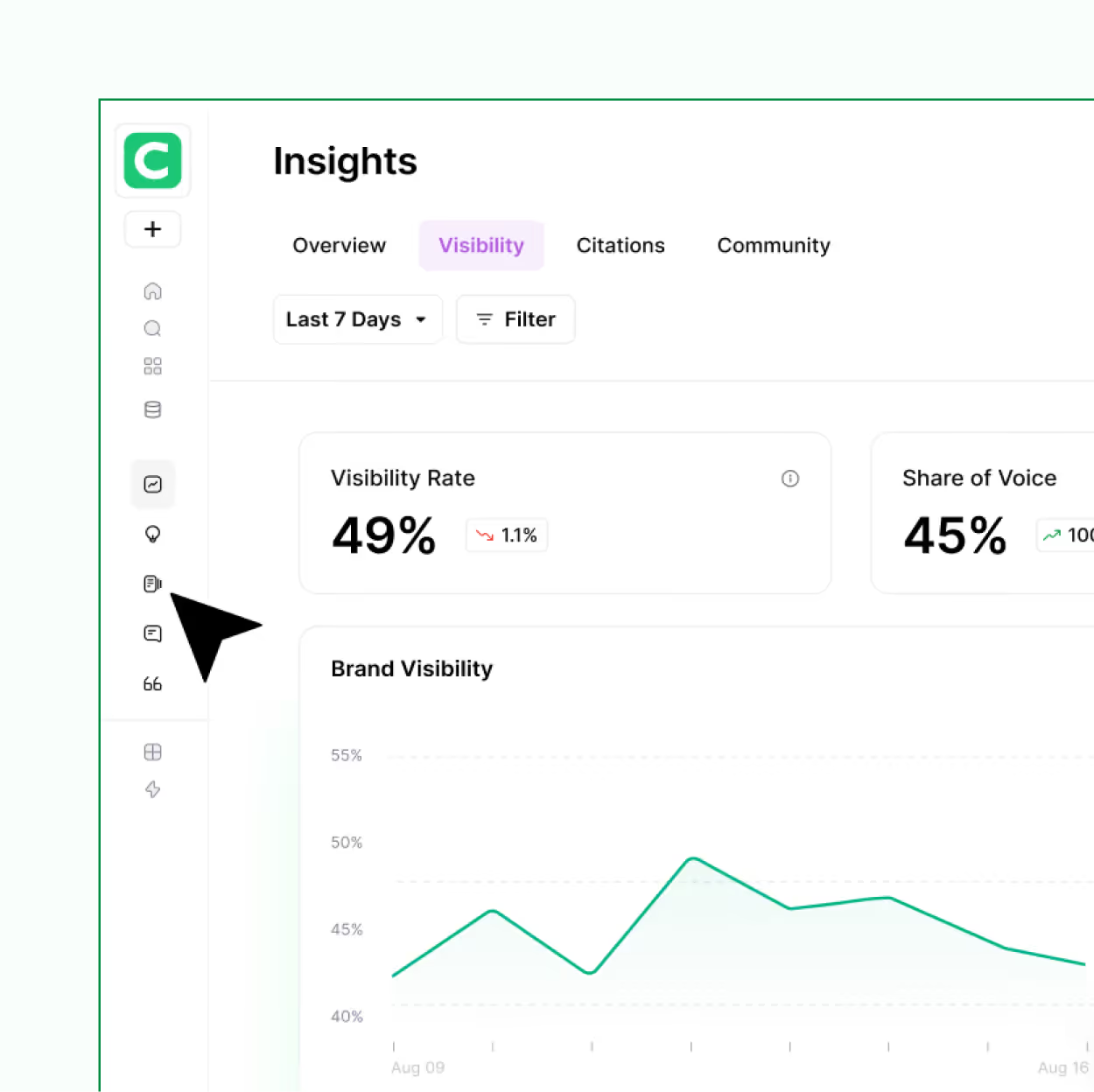
Plug in your domain, your competitors, and the buyer-intent prompts that matter to your category. AirOps scans responses across six AI engines daily, mapping which URLs get cited, which get mentioned, and which are completely absent - so you start with a complete picture, not a guess.

Prioritize by Impact
Not all citation gaps are equal. AirOps ranks opportunities by commercial intent, competitor citation density, and your existing content's proximity to winning the citation. You spend time on the pages and prompts that move pipeline, not vanity metrics.
Execute, Publish, and Measure Lift
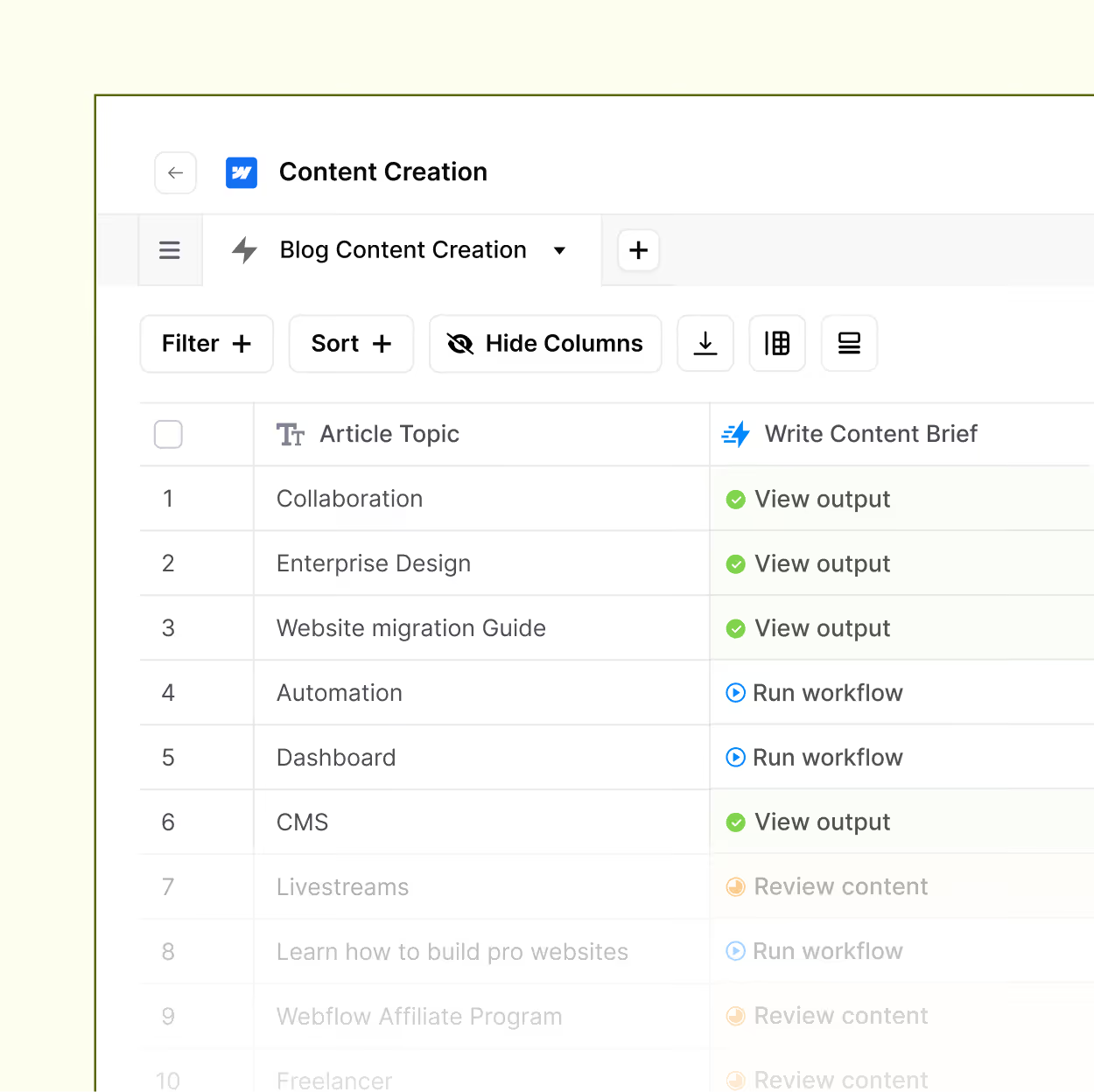
Generate a content brief directly from a citation gap, assign the update to your team, and track citation lift alongside GA4 referral traffic after the page goes live. The feedback loop is tight - most teams see measurable changes within their first content update cycle.
Frequently Asked Questions
What are the tools or features that set AirOps apart?
What is the difference between an LLM citation and a mention?
A citation occurs when an AI engine like ChatGPT or Perplexity links to or explicitly attributes information to a specific URL. A mention occurs when the AI references a brand name without providing a source link. Citations drive referral traffic you can track in GA4 and signal that the AI engine treats your content as a credible source. Mentions provide brand awareness but no direct click path. The best LLM citation analysis tools track both and let you filter by type so you can prioritize the prompts that generate attributable traffic.
Which AI engines should an LLM citation analysis tool monitor?
At minimum, a tool should cover ChatGPT, Perplexity, Google Gemini, Anthropic Claude, and Google AI Overviews. Leading platforms like AirOps also monitor Microsoft Copilot and Meta AI. Multi-engine coverage matters because citation patterns vary significantly across models - a page cited by Perplexity may be completely absent from Gemini's answers for the same prompt. If your tool only covers two or three engines, you're making optimization decisions with an incomplete map.
Can I track LLM citations manually without a dedicated tool?
You can spot-check by entering prompts into individual AI engines and recording which sources appear. However, manual tracking doesn't scale beyond a handful of prompts, can't benchmark competitors systematically, and misses the daily volatility that makes AI answers so unpredictable. You'll end up with spreadsheets of screenshots rather than actionable data. Dedicated LLM citation analysis tools automate this across thousands of prompts and multiple engines daily, giving you trend data instead of snapshots.
Do LLM citations actually drive measurable traffic and leads?
Yes. When an AI engine cites your URL, users can click through to your site, and that referral traffic is trackable in GA4. Tools with attribution capabilities can connect citation-driven visits to conversions and pipeline. As AI search usage grows - Perplexity alone processes millions of queries daily - citation-driven traffic is becoming a measurable channel. The teams treating this as a real acquisition channel now are building advantages that compound over time.
How is LLM citation tracking different from traditional SEO rank tracking?
Traditional rank trackers show your position in Google's organic results. LLM citation analysis tools show whether AI engines cite your content when generating answers - a fundamentally different signal. A page can rank number one in Google but never appear in ChatGPT's responses, and vice versa. Citation tracking requires monitoring prompt-level responses across multiple AI engines, not just SERP positions. Think of it as a parallel visibility layer that AEO readiness tools are designed to measure.
What's the best LLM citation analysis tool for startups versus enterprise teams?
For startups and budget-conscious teams, start with a free tier or low-cost plan to validate that LLM citations matter in your category before committing to enterprise pricing. AirOps offers a free tier, OtterlyAI starts at $29/mo, and PromptMonitor offers a 7-day trial. Enterprise teams should prioritize multi-engine coverage, competitor benchmarking at scale, GA4 revenue attribution, security certifications like SOC 2, and content execution workflows that turn citation gaps into content actions. AirOps is the only platform in the category that serves both ends with a free-to-enterprise pricing model.