AI Answer Optimization Tools
Your brand is being discussed in ChatGPT, Gemini, and Perplexity right now - but you can't see it. AirOps tracks, measures, and optimizes your AI visibility across 8+ engines in one platform.

Webflow 5xed content refresh velocity and increased visibility across Google and ChatGPT

Webflow 5xed content refresh velocity and increased visibility across Google and ChatGPT
Webflow 5xed content refresh velocity and increased visibility across Google and ChatGPT

Chime went from being recommended in 24 to 68 priority questions


George Bonaci VP of Growth, Ramp

Nicole Baer, CMO, Carta


50% cut in production costs, thanks to the elimination of external agencies and manual tasks.

Marcio Arnecke, CMO, Apollo















What Are AI Answer Optimization Tools?
AI answer optimization tools are platforms that help brands monitor, measure, and improve how they appear in AI-generated answers across engines like ChatGPT, Gemini, Perplexity, Claude, and Google AI Overviews. They track brand mentions, citations, source attribution, sentiment, and share of voice inside LLM-generated responses - then surface actionable recommendations so teams can earn more citations.
This matters now because AI search is not a future trend. Millions of people already use answer engines as their primary discovery tool. If your brand isn't showing up - or worse, being described inaccurately - you're losing pipeline you'll never see in Google Analytics.
Traditional SEO tools were built for a different paradigm. They track keyword rankings and backlinks, not what ChatGPT says when someone asks "what's the best tool for X?" The best AEO analysis tools bridge that gap by capturing real AI responses and turning them into visibility intelligence your team can act on. That's the difference between knowing your SERP position and knowing your share of voice inside the conversations that increasingly drive buying decisions.
AirOps vs Other AI Answer Optimization Tools
Choosing the best tool for AEO comes down to one question: do you want a dashboard that shows you data, or a platform that helps you do something about it? Here's how AirOps compares to other AEO trackers and LLM visibility tools across the capabilities that matter most for earning AI citations.
TL;DR: Most tools stop at monitoring. AirOps helps you track AI search visibility, diagnose why competitors are winning, and take action through repeatable optimization workflows.

How Teams Use AI Answer Optimization Tools
Visibility data is only valuable when it drives action. Here's how different teams turn AirOps intelligence into measurable outcomes.
Turn AI Visibility Into a Measurable Channel for Enterprise SEO
Enterprise SEO teams use AirOps to track brand citations and share of voice across every major AI engine - then feed optimization insights directly into SEO content automation workflows. Instead of guessing which pages matter for AI search, you get a prioritized list of content to update based on real citation gaps. That's how answer engine optimization tools for enterprise SEO teams become a growth channel, not just another dashboard.
Report AI Visibility Across Every Client Portfolio
Agencies managing multiple brands need the best LLM SEO tracking tool that scales without multiplying complexity. AirOps lets you monitor AI answer performance for every client from a single dashboard, benchmark each brand against competitors, and deliver executive-ready reports that justify AEO retainers. Check out our breakdown of the best LLM visibility tools to see how agencies are building this into their service offering.
Control Your Brand Narrative in AI Answers
PR and brand reputation teams use AirOps to detect when AI engines describe their brand inaccurately. With LLM citation tracking, you can monitor sentiment shifts across every engine and identify which content assets need updating to correct misinformation in AI-generated responses. When the narrative is wrong, you'll know before your customers do.
Start Monitoring AI Visibility Without Enterprise Pricing
Not every team needs a $500/month platform on day one. AirOps offers flexible plans so smaller teams can begin tracking brand mentions and citations in AI answers, then scale into optimization workflows as AI search becomes a larger traffic source. If you're evaluating the best AEO checking tools and pricing is a factor, this is a good place to start.
3 Steps to AI Visibility
Most tools in this category show you where you stand. AirOps shows you where you stand and tells you exactly what to do next.
Connect Your Brand
Enter your brand name, competitors, and target topics. AirOps begins scanning AI engines within minutes - no engineering setup, no complex onboarding. You'll define the prompts and categories that matter to your buyers, so every insight maps directly to the questions your audience is actually asking.
Monitor AI Answers Across Every Engine
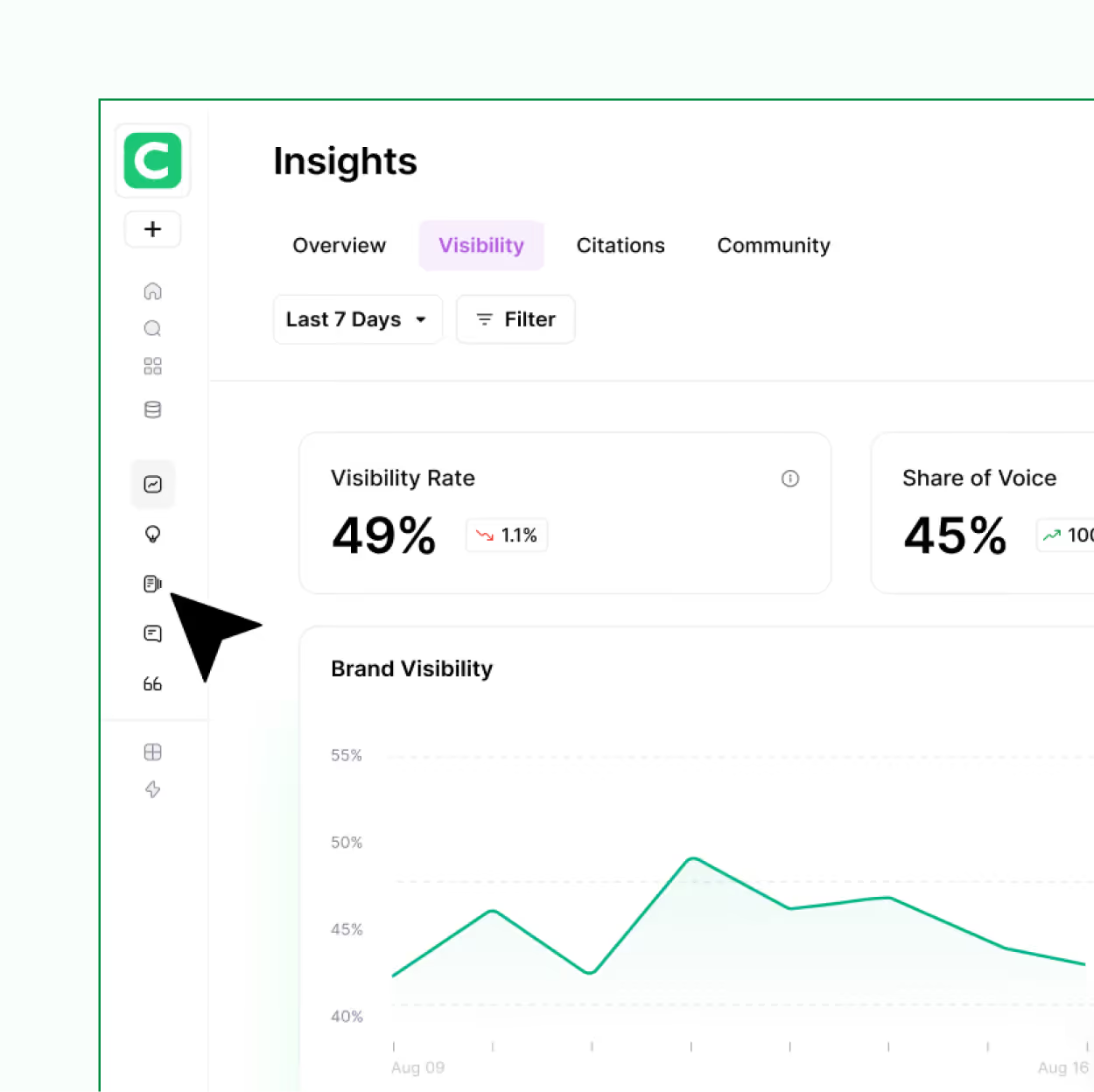
See exactly how ChatGPT, Gemini, Perplexity, Claude, and others mention your brand in real time. AirOps captures actual AI responses - not simulated ones - with citation tracking, sentiment scoring, and prompt-level analytics in a single dashboard. This is how teams monitor visibility in Perplexity and every other major LLM without toggling between tools.
Optimize Content to Earn More Citations
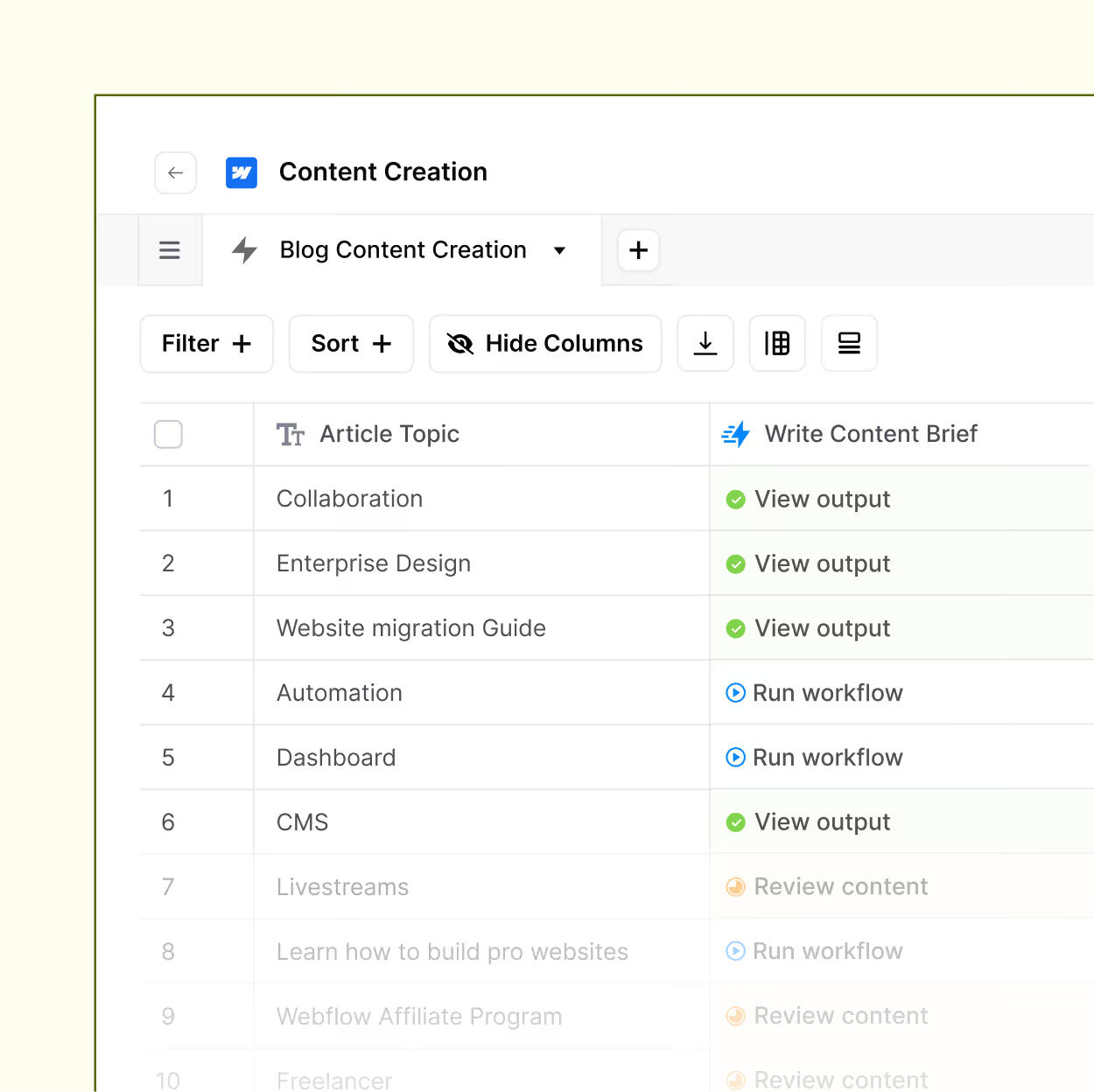
Here's where monitoring becomes momentum. AirOps identifies content gaps and delivers actionable recommendations - including content engineering briefs - so your team knows precisely which pages to create or update. The goal isn't just tracking AI search optimization key metrics over time. It's closing the gap between where your brand appears today and where it should be tomorrow.
Frequently Asked Questions
What are the tools or features that set AirOps apart?
What are answer engine optimization tools and how do they work?
Answer engine optimization tools (also called AEO tools) are platforms that help brands track and improve their visibility in AI-generated answers across ChatGPT, Gemini, Perplexity, Claude, Google AI Overviews, and other LLMs. They work by sending category-relevant prompts to AI engines, capturing the responses, and analyzing whether your brand is mentioned, cited, or recommended. The best tools go beyond monitoring to provide optimization workflows - identifying content gaps and recommending specific pages to create or update so your brand earns more citations. Think of them as the visibility layer for a search paradigm that traditional SEO tools were never designed to track.
How are AEO analysis tools different from traditional SEO tools?
Traditional SEO tools track keyword rankings and organic clicks on search engine results pages. AEO analysis tools track how AI engines respond to prompts about your brand, category, and competitors - measuring citations, source attribution, and brand perception inside LLM outputs. This is data that no traditional SEO tool captures, no matter how sophisticated. Teams increasingly need both, but they solve fundamentally different visibility problems. If you're exploring the latest search trends in 2025, you'll see why AEO analysis software is becoming essential alongside your existing SEO stack.
Which AI platforms should an answer engine optimization tool monitor?
The best tools monitor at least 6-8 AI engines: ChatGPT, Google Gemini, Perplexity, Claude, Google AI Overviews (AI Mode), Bing Copilot, Grok, and DeepSeek. Coverage matters because each AI engine uses different training data, retrieval methods, and citation behaviors - your brand may appear prominently in one and be completely absent from another. AirOps monitors all eight from a single dashboard, which is especially important for teams that need tools to monitor visibility in Perplexity and other engines without managing separate subscriptions for each.
What is LLM citation tracking and why does it matter?
LLM citation tracking is the process of identifying when and where AI engines cite your website, content, or brand as a source in their generated answers. It matters because citations drive referral traffic, build authority signals, and directly influence whether AI engines continue to reference your content in future responses. Tools like AirOps track the full citation chain - not just mentions, but the specific URLs being attributed. This is the foundation of any serious LLM link citation tracking strategy, and it's the metric that most directly connects AI visibility to measurable business outcomes.
Can AI answer optimization tools help with content optimization, not just monitoring?
Most tools in this category focus primarily on monitoring - showing you where your brand appears and where it doesn't. Fewer tools provide actionable optimization workflows, which is the single most important distinction when evaluating the best AEO checking tool for your team. AirOps bridges this gap by detecting content gaps, recommending specific pages to create or update, and providing content briefs designed to improve citation likelihood across AI engines. If you want to optimize content for answer engines rather than just watch dashboards, look for platforms that explicitly connect monitoring data to content action plans.
How much do AI answer optimization tools cost?
Pricing varies significantly across the category. Entry-level tools start around $29-$39/month for basic monitoring. Mid-tier platforms with citation tracking and competitor benchmarking typically range from $99-$199/month. Enterprise platforms with full optimization workflows, API access, and multi-brand support can run $495/month or more. AirOps offers flexible plans designed to scale from initial monitoring through full AEO program management - you can see current pricing to find the right fit. The key is matching your investment to your maturity: start with monitoring, then scale into optimization as AI search becomes a larger share of your discovery traffic.