AEO is the fastest-growing channel in organic marketing. Teams at AirOps have tracked thousands of pages across AI search providers over the past year. The pattern is consistent: well-structured content on authoritative domains earns AI visibility in weeks, not months.
But "results" means different things at different stages. A mention in a ChatGPT answer is a different milestone than a citation linking back to your page. Your team needs to know which signals to expect and when.
This post breaks down the real AEO timeline with specific milestones at 30, 60, and 90 days, plus the factors that accelerate or slow your progress.
What AEO results actually look like
Most guides treat AI visibility as one metric. AI visibility includes two distinct milestones, and they move on different timelines.
A mention means an AI named your brand in its answer. A citation means the AI linked to your page as a source. Both matter, but they tell you different things about your progress.
Three metrics define AEO performance:
- Mention rate: The percentage of relevant AI answers that name your brand.
- Citation rate: The percentage of relevant AI answers that link to your page.
- Share of voice: The percentage of AI answers mentioning your brand compared to your competitors.
Mentions come first. They indicate that AI models have ingested your content and associate your brand with a topic. Citations follow once the AI engine confirms your page as a reliable source through repeated crawling.
Most AEO guides conflate these two milestones. The distinction matters because it changes how you set expectations with your team and your leadership. A mention rate climbing from 0% to 5% by day 45 confirms your content is being ingested, even before citations appear.
You need to track citations and mentions separately. A citation means the AI linked to you. A mention means it talked about you. Both matter, but they're different signals.
Alex Halliday
The AEO timeline: 30, 60, and 90 days
Days 1 to 30: Foundation and indexing
The first month is setup. You won't see visibility changes yet. That's expected and normal.
Start with a content audit. Identify every page on your site that answers a specific question. Look for pages where the answer is buried in the third paragraph or wrapped in marketing language. Restructure those pages so the direct answer appears in the first two sentences under each H2.
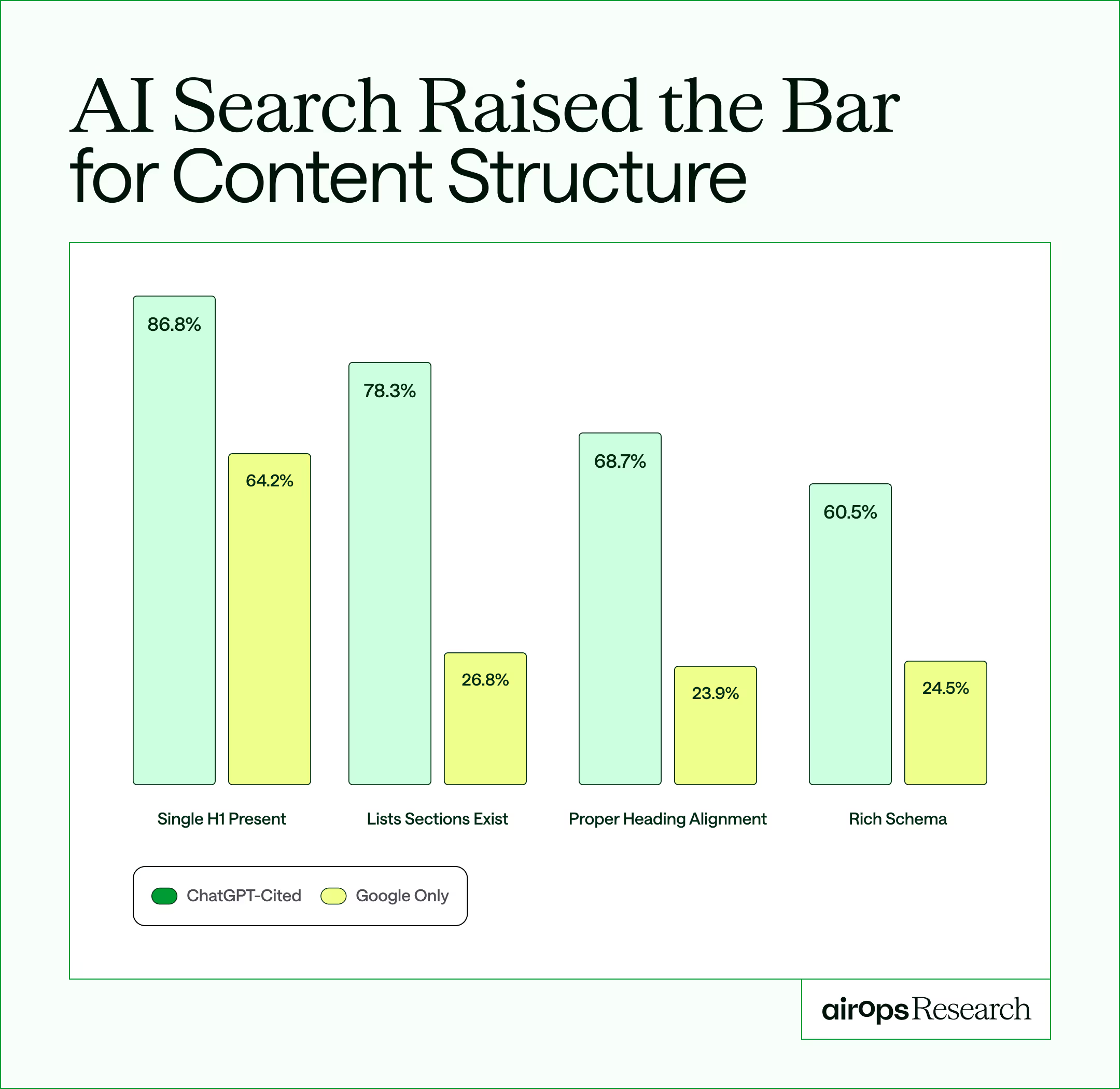
Add question-based H2 headings. Implement FAQ schema on your most important pages. Improve internal linking between topically related pages so AI crawlers can follow the relationship between your content.
Benchmark your current mention rate and citation rate across ChatGPT, Gemini, Perplexity, and Google AI Overviews. These baselines are essential. Without them, you have no way to measure whether your day-30 and day-60 numbers represent real progress or statistical noise.
During this window, focus on structural improvements, not new content creation. Fix what you have before you build more.
Days 30 to 60: First mentions appear
Well-structured pages on authoritative domains start showing up in AI answers during this window.
Mentions are the first signal. Pages targeting specific, question-shaped queries see results first. A page titled "What is Answer Engine Optimization?" performs earlier than a broad pillar page about digital marketing trends.
Track mentions by provider. You may see signals in Perplexity before ChatGPT, or in Google AI Overviews before Gemini. Each provider crawls at different frequencies and weighs different quality signals.
The traffic you get from AI search behaves differently than traditional organic traffic. These visitors arrive with higher intent. The AI already filtered their query and decided your content was relevant enough to surface. Conversion rates from AI referral traffic outperform standard organic because the AI pre-qualifies the visitor before they ever reach your page. Recent research on how to increase your brand visibility on AI search engines confirms this pattern.
The traffic from AI search is different. It's higher intent, more qualified. These users have already been filtered by the AI. — Ethan Smith
Days 60 to 90: Citations and compounding
Citations begin appearing as AI engines verify your content through repeated crawling. A mention means the AI knows about you. A citation means it trusts you enough to send its users to your page.
Compounding kicks in during this window. Pages that earn early citations attract more AI attention. Citation rate growth accelerates. New pages on your domain benefit from the trust your earlier content built. This is similar to how backlink authority compounds in SEO, but the cycle is faster. Understanding the mechanics of getting cited by AI can help you accelerate this phase.
ROI becomes measurable here. You can connect citation rate growth to referral traffic, qualified pipeline, and revenue attribution. If you set proper baselines at day zero, the data tells a clear story for your leadership team.
What speeds up (and slows down) AEO results
Five factors accelerate your AEO timeline:
- Existing domain authority. Sites ranking on Google page one have a measurable head start in AI answers.
- Direct-answer content structure. Pages that answer a specific question in the first two sentences under each heading.
- FAQ schema and structured data that make your content easy for AI crawlers to parse.
- Regular content refreshes every 4 to 6 weeks. AI engines deprioritize pages that haven't been updated recently, and refreshed pages retain citation rates at higher levels than stale equivalents.
- Strong internal linking between topically related pages. This helps AI models map your content relationships.
Four factors slow you down:
- JavaScript-heavy pages that AI crawlers can't render. Static HTML performs better.
- Thin or overly broad content that doesn't answer specific questions with depth.
- No measurement infrastructure. You can't optimize what you don't track.
- Stale content older than 6 months. AI engines deprioritize outdated pages.
One underrated accelerator: finding the specificity gap. If every competitor writes the same generic article about a topic, the team that goes deeper on a specific angle earns citations faster.
If you can get the information from the page without having to run JavaScript... the better off you're going to be. — Lily Ray
How AEO compares to SEO timelines
SEO timelines are gated behind link authority accumulation. Competitive keywords take 3 to 6 months to rank for, sometimes longer. You need backlinks, domain authority growth, and consistent crawl frequency. The work compounds, but the initial wait is real.
AEO timelines are gated behind content structure. A well-structured page on an authoritative domain can appear in AI answers within 60 days. You don't need to build new backlinks specifically for AEO. Structure and relevance do the work. Recent AI search optimization data supports this distinction.
The two channels are complementary. Strong SEO gives you a head start in AEO because domain authority carries over. AI engines reference the same trust signals that Google uses for traditional rankings.
But ranking well in Google alone isn't enough. Your page also needs to be structured as a direct, complete answer to a specific question. A page that ranks #1 for a keyword but buries the answer below three paragraphs of preamble will underperform in AI search compared to a page that leads with the answer.
Think of SEO as your foundation and AEO as the new floor you're building on top of it. The stronger the foundation, the faster the new floor goes up.
How to measure AEO progress
Track mention rate and citation rate as separate KPIs. They move at different speeds and reflect different stages of AI visibility growth.
Monitor results by AI provider too. ChatGPT, Perplexity, Gemini, and Google AI Overviews each crawl and surface content differently. A page may earn citations on Perplexity weeks before it appears in Google AI Overviews. Provider-level tracking helps teams spot momentum earlier instead of waiting for broad visibility gains.
Set baselines before making any optimization changes. Then review performance in 30-day windows. Focus less on the raw number and more on directional movement. A page moving from 1% to 4% citation visibility in a month tells a more meaningful story than a static snapshot.
A flat first 30 days is normal. That period is usually about restructuring content, improving crawlability, and strengthening retrieval signals. If metrics remain flat past 60 days, revisit your question targeting, content structure, internal linking, or schema implementation instead of waiting for results to appear on their own.
Report AEO metrics alongside SEO and paid performance so leadership can see how visibility is shifting across both traditional and AI search.
The teams making the fastest progress treat AEO measurement as an ongoing feedback loop. They track which pages gain mentions first, which citations compound over time, and which content structures consistently earn visibility across providers.
AirOps helps teams monitor citation rate, mention rate, and AI visibility trends across major platforms so they can identify what’s working and prioritize the next actions faster.

AEO results come faster than most teams expect
AEO doesn’t follow the same timeline as traditional SEO.
Strong pages can start appearing in AI answers within weeks when the structure is clear, the content directly answers specific questions, and the domain already carries topical authority. Mentions often appear first. Citations follow as AI engines repeatedly crawl and validate the page.
That progression matters because it gives teams earlier signals to work from. Instead of waiting months to see whether content performs, marketers can measure visibility shifts across AI platforms in shorter feedback cycles and improve faster.
The teams seeing the strongest results are building AEO into their broader content and SEO programs now. They’re restructuring existing pages, improving measurement, and treating AI visibility as an ongoing part of search performance.
AirOps helps teams monitor AI visibility across providers, connect those signals to SEO performance, and prioritize the content updates most likely to drive compounding results. Beyond the platform, the AirOps team builds and runs the strategy alongside yours, from owned content to third-party evidence, and ties it back to pipeline and revenue.
