Best AI Search Brand Monitoring Tools in 2026
Your brand may rank on Google but stay invisible in ChatGPT, Perplexity, and Gemini. AirOps tracks your AI search visibility, citations, sentiment, and competitor share of voice across every major AI engine - so you can act before buyers move on.

Webflow 5xed content refresh velocity and increased visibility across Google and ChatGPT

Webflow 5xed content refresh velocity and increased visibility across Google and ChatGPT
Webflow 5xed content refresh velocity and increased visibility across Google and ChatGPT

Chime went from being recommended in 24 to 68 priority questions


George Bonaci VP of Growth, Ramp

Nicole Baer, CMO, Carta


50% cut in production costs, thanks to the elimination of external agencies and manual tasks.

Marcio Arnecke, CMO, Apollo















What Are AI Search Brand Monitoring Tools?
An AI search brand monitoring tool tracks how your brand appears in AI-generated answers across platforms like ChatGPT, Perplexity, Google AI Overviews, Gemini, Claude, and Copilot. Unlike traditional rank trackers that measure SERP positions, these tools monitor whether each AI powered answer engine mentions, cites, recommends, or misrepresents your brand in conversational responses.
This matters right now because AI answers are shaping buyer perception before anyone clicks a link. Research shows that a growing share of B2B and B2C purchase journeys begin and end inside LLM-generated responses. If your brand is absent from those answers, you are invisible at the exact moment buyers are forming shortlists.
Traditional SEO tools and social listening platforms were not built for this. LLM SEO tools track keyword-level visibility, while brand mention tools like Brandwatch monitor social channels. Neither captures what AI engines actually say about you in real time. AI search brand monitoring tools sit at the intersection of AI visibility metrics, LLM citation tracking, and competitive intelligence - giving you the full picture traditional tools simply cannot.
Best AI Search Brand Monitoring Tools Compared
We evaluated the leading AI search brand monitoring platforms on the capabilities that matter most to SEO, brand, and growth teams. Whether you are looking for the best LLM SEO tracking tool or the best software for LLM visibility, here is how AirOps stacks up against the field.
TL;DR: Most tools stop at monitoring. AirOps helps you track AI search visibility, diagnose why competitors are winning, and take action through repeatable optimization workflows.

Which AI Brand Monitoring Tool Is Best for Your Team?
Monitoring is only valuable when the right people can act on what they see. Here is how different teams use AI search brand monitoring data to protect revenue and grow visibility.
Detect AI Visibility Drops Before They Impact Pipeline
SEO teams use AirOps to track brand presence across ChatGPT, Perplexity, and AI Overviews alongside traditional rankings. When an AI engine stops recommending you, you will know before competitors fill the gap. Pair AI brand monitoring with your existing AI search optimization tracking for key metrics over time to see the full picture of how organic performance is shifting across both traditional and AI search.
Monitor How AI Describes Your Brand in Real Time
Brand and PR teams need to see the exact language AI engines use when mentioning their company. AirOps catches misrepresentations, hallucinated claims, or competitor recommendations early - protecting brand narrative across every AI touchpoint. Understanding the impact of featured brands on LLM citations helps you prioritize which narratives to correct first.
Deliver AI Visibility Reporting Clients Cannot Get Elsewhere
Agencies and consultancies use AirOps to offer clients competitive share of voice benchmarks, citation tracking, and prompt-level insights across all major LLMs. This is a service tier no one else is providing, and it is the kind of differentiation that wins and retains accounts. The best LLM visibility checker becomes your agency's unfair advantage.
Operationalize AI Brand Intelligence Across Teams
Enterprise marketing teams route AI visibility alerts to SEO, PR, product, and demand gen via Slack, email, or webhooks. AirOps turns monitoring data into coordinated action - from content engineering workflows to executive reporting - so no signal gets lost between teams.
3 Steps to AI Brand Visibility
Most AI search monitoring tools stop at dashboards. AirOps connects monitoring directly to the workflows that improve your visibility - so data becomes action in the same platform.
Connect Your Brand
Enter your brand name, competitors, and the topics that matter to your category. AirOps begins monitoring across ChatGPT, Perplexity, Gemini, Google AI Overviews, Claude, and Copilot within minutes. No complex setup, no engineering resources required.
Track Mentions, Citations & Sentiment in Real Time
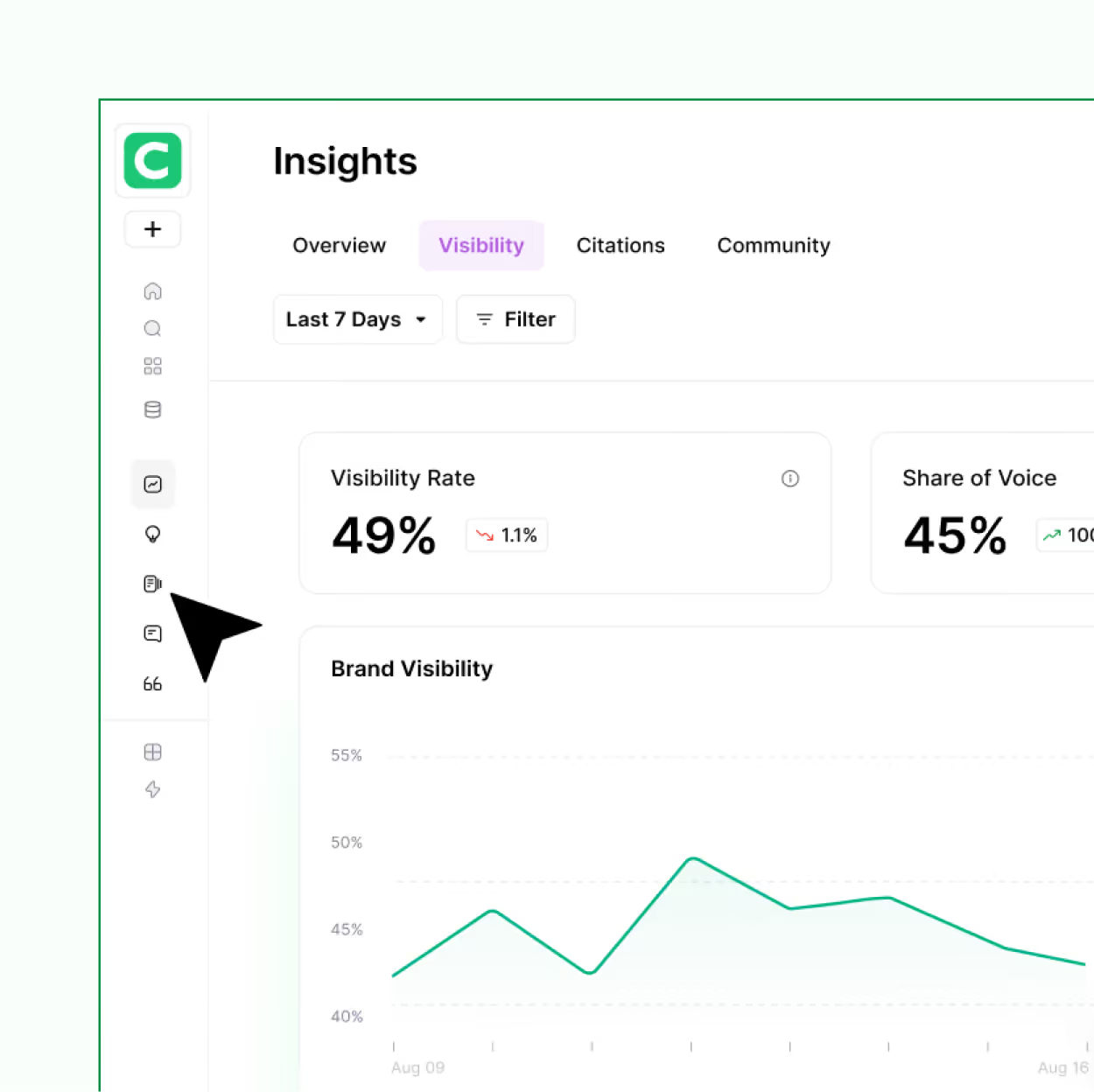
Your dashboard populates with live data showing where AI engines mention your brand, what language they use, which sources they cite, and how your share of voice compares to competitors. Historical trend lines let you spot patterns that point-in-time snapshots miss entirely.
Act on Visibility Insights Before Competitors Do
Receive configurable alerts the moment visibility shifts. Each alert comes paired with specific optimization recommendations - which content to update, which authority assets to build, which citation gaps to close. Your team moves from detection to action in the same workflow, not across three different tools.
Frequently Asked Questions
What are the tools or features that set AirOps apart?
How is AI search brand monitoring different from LLM SEO tracking?
AI search brand monitoring focuses specifically on how AI engines mention, describe, and recommend your brand - including sentiment, narrative accuracy, and competitive positioning. LLM SEO tracking is broader, covering keyword-level visibility and ranking signals across AI search results. Brand monitoring adds citation tracking, sentiment analysis, and brand narrative monitoring on top of visibility data. Teams focused on brand reputation and demand capture need both, but brand monitoring provides the actionable layer for PR, comms, and brand teams. AirOps combines both capabilities so you do not need separate tools for each.
Which AI search engines should a brand monitoring tool cover?
A comprehensive AI search brand monitoring tool should cover at minimum ChatGPT, Perplexity, Google AI Overviews, and Gemini. Advanced tools also monitor Claude, Microsoft Copilot, and Google AI Mode. Coverage matters because each AI engine uses different training data, retrieval sources, and response patterns - your brand may be visible in one and completely absent in another. If you want to test content visibility in Perplexity and ChatGPT manually, you will quickly see how much variation exists. AirOps monitors all six major AI search platforms from a single dashboard so you never have a blind spot.
What is LLM citation tracking and why does it matter for brand monitoring?
LLM citation tracking identifies which sources AI engines reference when mentioning your brand in their responses. This includes both linked citations where the AI provides a URL and unlinked mentions where your brand is named without a source link. Citation tracking matters because it reveals why AI engines recommend you and which content assets are driving your AI visibility. If competitors' content is cited more frequently, it directly impacts whether AI recommends them over you. AirOps provides full LLM citation tracking with source attribution so you can see exactly which assets earn mentions and where gaps exist.
Can AI search brand monitoring replace traditional SEO tools?
No. AI search brand monitoring complements traditional SEO tools rather than replacing them. Traditional tools track keyword rankings, backlinks, and SERP positions. AI brand monitoring tracks a different surface entirely - how LLMs mention, cite, and describe your brand in conversational answers. The most effective teams use both. AirOps integrates AI visibility data alongside your existing SEO workflows, and teams often pair it with answer engine optimization tools and AEO readiness analysis to close the loop between monitoring and optimization.
How do you measure AI share of voice for your brand?
AI share of voice measures how frequently your brand is mentioned or recommended in AI-generated responses compared to competitors across a defined set of prompts and topics. It is calculated by tracking brand mentions across relevant queries in ChatGPT, Perplexity, Gemini, and AI Overviews, then benchmarking your mention frequency, citation rate, and sentiment against competitors in your category. AirOps provides automated search engine share of voice dashboards with historical trend data so you can track changes over time and correlate visibility shifts with specific content or PR actions.
What should teams do after detecting an AI visibility drop?
When monitoring reveals a visibility drop, teams should first identify which AI engines and prompts are affected, then analyze whether competitor content has been newly cited in their place. Next, review the content assets that previously drove your citations and optimize content for answer engines - including FAQ schema, structured data, and authoritative source pages. Teams building at scale often use SEO content automation and programmatic SEO workflows to refresh the types of pages that benefit from AI-driven refreshes. AirOps provides specific optimization recommendations alongside every alert so teams move from detection to action immediately.