How to Score Title Tag Quality Across Hundreds of Pages Using AI

- Title tag quality is measurable. A 100-point rubric scores five dimensions: integrity, keyword relevance, uniqueness, click appeal, and AI search readiness.
- AI evaluates what legacy tools miss. Semantic alignment, intent match, and LLM citation potential go beyond character counts.
- Batch scoring turns weeks into hours. AirOps Grids process up to 1,000 URLs at once, replacing manual audits with repeatable workflows.
- Scores connect to real outcomes. Map title quality directly to CTR, rankings, and AI citation rates.
- The score-optimize-measure loop compounds results. Each audit cycle lifts both traditional SEO and answer engine optimization (AEO) performance.
Most title tag audits stop at character counts and keyword placement. That worked when title tags existed primarily to support rankings. Today they also influence how AI systems interpret and surface content.
As sites grow into hundreds or thousands of pages, manual title reviews become inconsistent and difficult to scale. Teams need a way to evaluate title tags using the same criteria across every page.
In this guide, you'll learn how to build a 100-point title tag quality scoring system, use AI to evaluate title tags in bulk, and connect those scores to real SEO and AI search outcomes.
Why title tag quality needs a scoring system
Title tags remain one of the highest-leverage on-page elements in SEO. A well-optimized title tag can lift click-through rates by 20% or more, according to Backlinko research on title tags. Yet most teams still audit them manually or rely on title tag grading tools that only check character length.
Managing 100, 500, or 5,000 pages with manual title reviews leads to inconsistent quality and missed optimization opportunities. Google rewrites roughly 61% of title tags it encounters, according to a Zyppy study of 80,000 titles. Title tag checkers that only measure character length miss the semantic and intent signals AI engines use to decide which pages to cite.
A scoring system solves this. It turns subjective judgment into a repeatable, measurable audit. You define the criteria once, run it across your entire site, and get a prioritized list of pages that need attention.
The 5 dimensions of title tag quality
The scoring rubric below evaluates every title tag on a 100-point scale. Each dimension targets a specific quality signal. You can adjust weights to match your site's priorities.
Title integrity (20 Points)
This dimension covers the basics. Is the title present? Is it within the recommended 50 to 60 character range (or 480 to 580 pixel width)? Does brand placement follow your site's guidelines per Google's title link documentation? Are separators and punctuation consistent?
For a deeper dive on length and formatting, see this guide on meta title best practices.
Scoring breakdown:
- Title present and non-empty: 5 points
- Length within recommended range: 5 points
- Brand placement follows site guidelines: 5 points
- Clean punctuation and consistent separators: 5 points
Keyword relevance (25 Points)
Keyword placement and semantic alignment determine relevance more than keyword presence alone. A primary keyword front-loaded in the title carries more weight than one buried at the end. The title should also align with the page's H1 and body content.
- Primary keyword present and front-loaded: 15 points
- Semantic alignment with page content and H1: 10 points
Uniqueness (20 Points)
Duplicate or near-duplicate title tags create cannibalization risk. Two pages targeting the same keyword with similar titles compete against each other in search results. Score uniqueness by comparing each title against every other title on the site.
- Title is distinct from all other pages: 10 points
- No cannibalization risk with sibling pages: 10 points
Readability and click appeal (20 Points)
A title tag competes for attention on a crowded SERP. A title that communicates the page's value in under two seconds passes the glance test. Pair that clarity with a value-driven hook, and you have a title worth clicking.
- Clear, scannable language: 10 points
- Emotional or value-driven hooks without clickbait: 10 points
AI search readiness (15 Points)
This dimension is new. AI engines often use title tags as a signal when evaluating which pages to cite. A title that clearly communicates the page topic reduces rewrite risk from both Google and LLMs. Research on metadata optimization for AI search confirms that AI engines rely heavily on title tags and meta descriptions when selecting citations.
As Eli Schwartz put it in a recent AirOps webinar:
"AI visibility is fundamentally a brand game. The brands that get mentioned are the ones that show up everywhere."Your title tag is often the first brand signal an AI engine encounters.
Pages with clear FAQ sections, direct answers, and structured data are cited 3x more often by LLMs (AirOps Research). Title tag quality functions as a leading indicator of that same content clarity. For more on structuring content for AI citation, see AEO content structure best practices.

Full scoring rubric
How to extract and prepare title tags at scale
Before you can score, you need data. Use a crawler like Screaming Frog, Sitebulb, or a custom script to pull title tags alongside the context each title needs for evaluation.
Export your crawl to a CSV with these columns:
Clean the dataset before scoring. Remove non-HTML pages (PDFs, images), deduplicate rows, and filter down to priority sections of your site. If you manage thousands of URLs, start with your highest-traffic templates.
Scoring title tags with AI: Three approaches
You have three paths to run AI-powered scoring. The right one depends on your team size, technical resources, and page count.
Spreadsheet + AI plugin (No-Code)
Use GPT for Sheets, Claude in Sheets, or a similar plugin. Feed each row (title, keyword, H1) to the LLM with a structured scoring prompt. Request JSON output with scores per dimension.
This approach works well for teams managing under 500 pages with no engineering support. The limitation: speed. Plugins process one row at a time, and rate limits slow large batches.
Scripted pipeline (Python or Node)
Build a loop that crawls, extracts, prompts, scores, and outputs a CSV. Batch your API calls to manage cost and rate limits. Add rule-based pre-scoring for mechanical checks (length, duplicates) before sending to the LLM. This saves tokens and money.
Best for teams with engineering capacity managing 500 to 5,000 pages.
Platform automation
Orchestration platforms let you run scoring as a repeatable workflow. Connect to your CMS data, run scoring across all pages, and output prioritized action lists. See how teams build AI workflows for content refreshes that follow this same pattern.
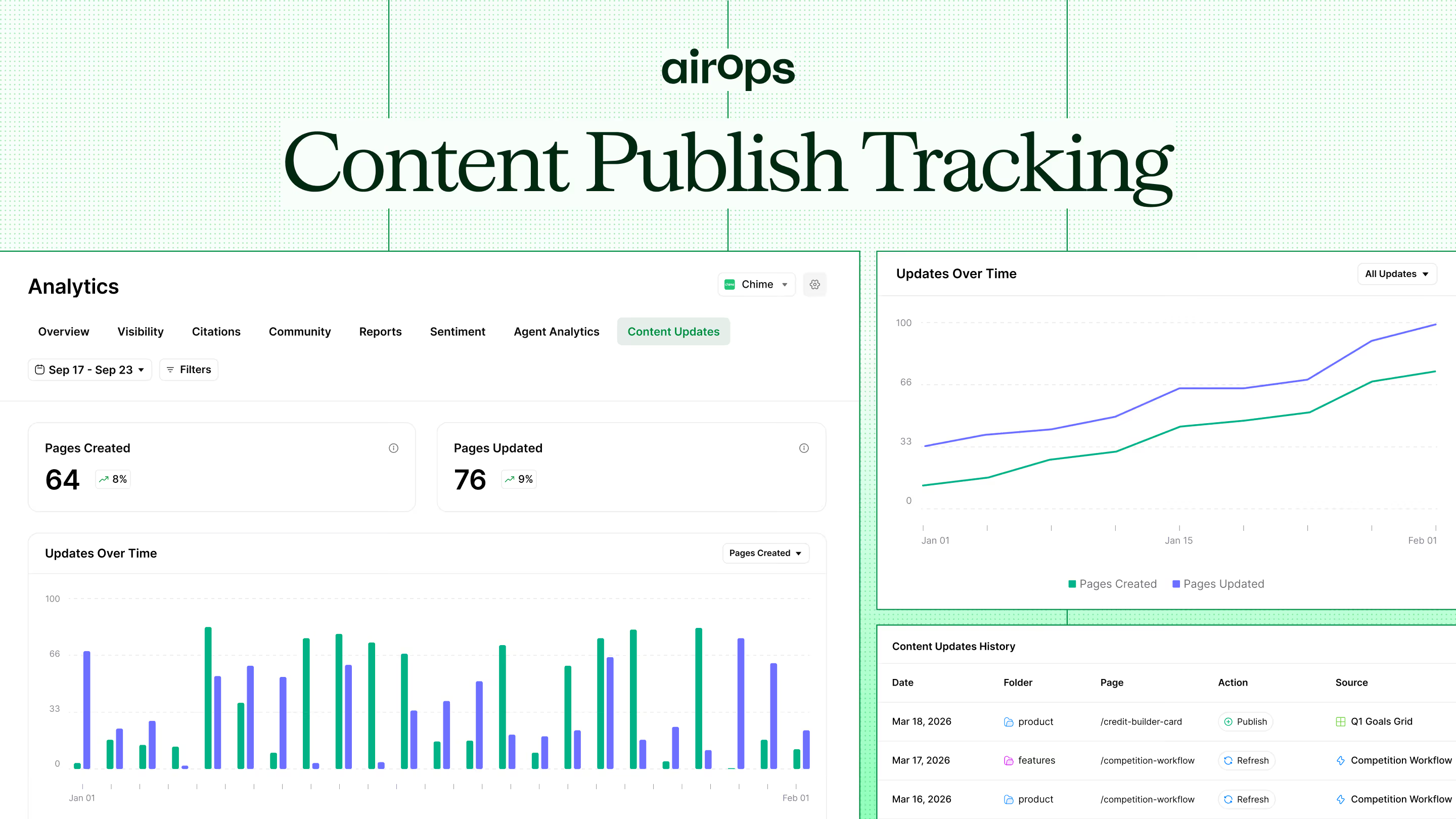
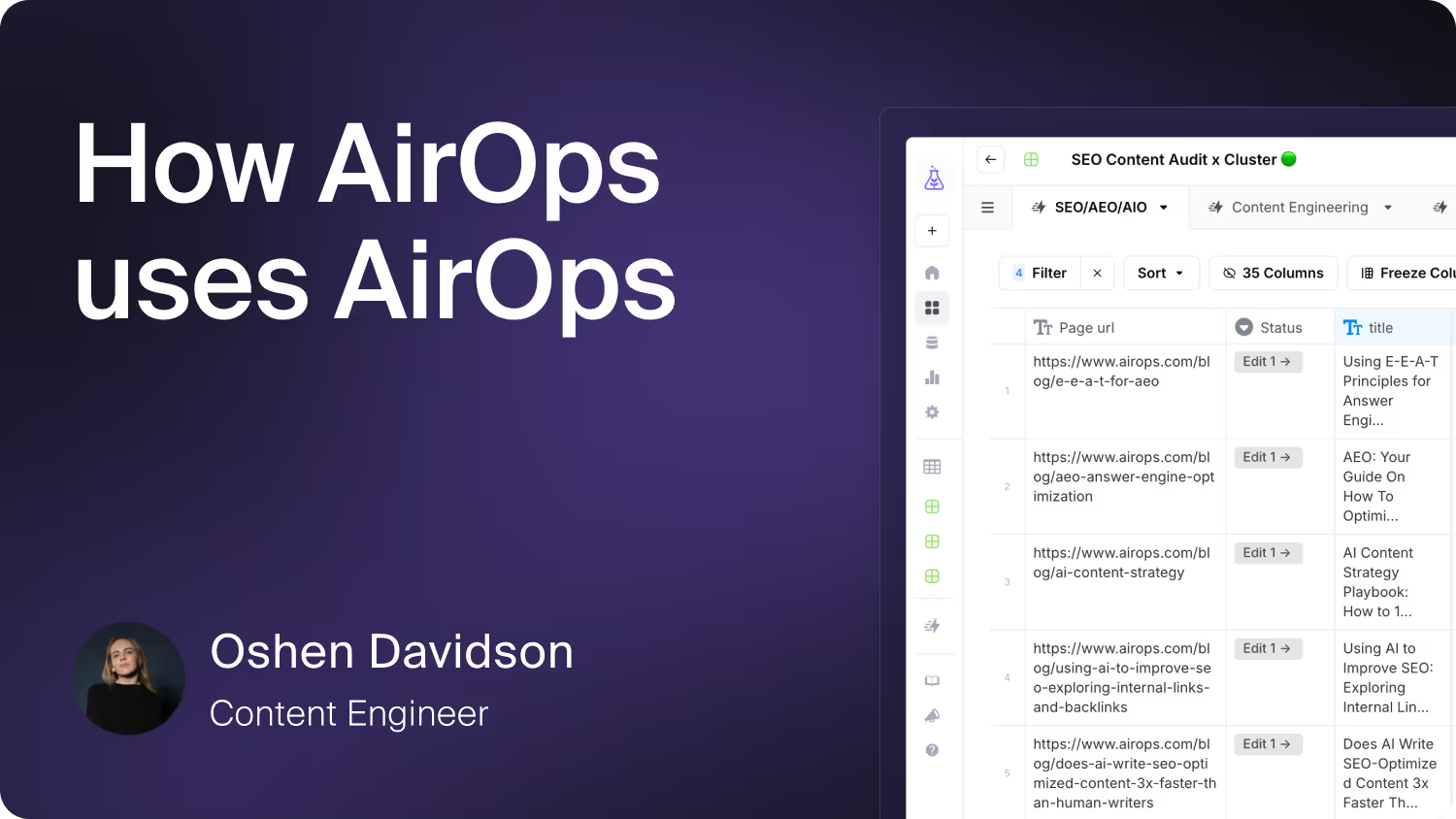
AirOps helps teams run title tag audits across large sites without juggling spreadsheets, scripts, and manual reviews. AirOps Grids process up to 1,000 URLs at once. You load your crawl data, attach a scoring prompt, and run the entire audit in a single batch. Power Agents include a title tag optimization workflow that scores every title and pushes approved rewrites directly to your CMS.

As Ethan Smith shared at an AirOps event:
"You should be thinking about chunk-level relevance... making sure that each section of the page answers a specific question clearly."That principle applies to title tags too. Each title should answer one question: what is this page about?
The prompt that powers your scoring
Here is a prompt template you can adapt for any of the three approaches above. Customize the weights to match your site's priorities. For more prompt templates, explore this guide on creating optimized title tags.
You are an SEO title tag auditor. Score the following title tag on a 100-point scale across five dimensions.INPUT:- URL: {url}- Current Title: {title}- Target Keyword: {keyword}- H1: {h1}- Page Type: {page_type}SCORING RUBRIC:1. Title Integrity (20 pts): Present, 50-60 chars, brand placement correct, clean punctuation.2. Keyword Relevance (25 pts): Primary keyword present and front-loaded (15 pts). Semantic alignment with H1 and page type (10 pts).3. Uniqueness (20 pts): Score 0 if duplicate list is provided and a match exists. Otherwise score 20.4. Readability & Click Appeal (20 pts): Passes glance test (10 pts). Value-driven hook without clickbait (10 pts).5. AI Search Readiness (15 pts): Topic clearly communicable to LLM (8 pts). Low rewrite risk (7 pts).OUTPUT FORMAT (strict JSON):{"total_score": <int>,"title_integrity": <int>,"keyword_relevance": <int>,"uniqueness": <int>,"readability": <int>,"ai_readiness": <int>,"issues": ["<string>"],"suggested_rewrite": "<string>"}
Tips for consistent results:
- Always request JSON output. It parses cleanly into spreadsheets and databases.
- Include page context (H1, page type, keyword). Without context, the LLM scores in a vacuum.
- Set strict scoring boundaries. Specify exact point ranges per criterion so scores are comparable across runs.
- Run a calibration batch of 20 to 30 titles first. Review the scores manually and adjust your prompt before scaling.
From scores to action: Closing the loop
A scoring rubric only creates value when it drives decisions. Bucket your pages into three tiers:
- Critical (below 60): Truncated titles, missing keywords, duplicates. Fix these first.
- Needs work (60 to 80): Weak click appeal, poor semantic alignment, or low AI readiness. Schedule for optimization.
- Healthy (80+): Monitor quarterly. These are performing.
Prioritization Matrix
The highest-ROI titles to fix are low-scoring pages with high impressions in Google Search Console. These pages already have visibility. A better title converts that visibility into clicks.
As Andy Crestodina shared in a recent AirOps webinar:
"Content refreshing is one of the most underrated levers. Both Google and AI engines reward freshness."
Generate AI-suggested rewrites for every title scoring below 70. Then run those rewrites through human review before publishing. AirOps Workflows connect this entire sequence. Insights identifies which pages are underperforming, and Grids handles bulk scoring and rewrite generation while Power Agents push approved changes directly to your CMS. Webflow used AirOps to run bulk content and metadata optimization across thousands of pages, achieving measurable lifts in AI citations within 30 days. The team could identify weak pages, generate improvements in bulk, and publish updates without rebuilding the process for every audit cycle.
Schedule recurring audits at minimum quarterly. For a complete content refresh strategy, build title tag scoring into your regular content health reviews. If you publish more than 50 pages per month, run them monthly. Each cycle feeds data back into the next.
Start with your highest-traffic pages, run the scoring rubric, and fix the titles that are costing you clicks today. Your next audit cycle will already have a baseline to beat. Book a call to see how AirOps runs title tag scoring at scale.
Better title tags start with better measurement
Most teams treat title tags as a one-time optimization task. The highest-performing teams evaluate them continuously.
A consistent scoring framework helps you identify weak titles, prioritize fixes, and measure impact over time. When you combine AI-powered evaluation with human review, title tag optimization becomes faster, more scalable, and easier to connect to business outcomes.
Focus on building a repeatable process that improves click-through rates, strengthens topical relevance, and increases visibility across both traditional search and AI search. Perfect scores matter less than consistent improvement over time.
How AirOps helps with title tag optimization
Large sites need a practical way to evaluate and improve title tags consistently. AirOps helps teams evaluate, prioritize, and optimize title tags across hundreds or thousands of pages from a single system.
With AirOps Grids, teams can score large batches of URLs against a custom rubric, generate recommended rewrites, and route approved updates into their publishing process. Combined with AI Search visibility insights, title tag optimization becomes part of a continuous content improvement system rather than a one-time audit.
Ready to evaluate title tags at scale? Book a demo today.
FAQs
Can AI evaluate title tag quality better than a human?
AI applies consistent criteria across hundreds of pages without fatigue or drift. Humans bring creative judgment. The best results combine AI scoring with human review for titles that score below your threshold.
How often should I run a title tag audit?
Quarterly for most sites. Monthly if you publish more than 50 pages per month or compete in a high-velocity SERP.
Does title tag quality affect AI search visibility?
Yes. AI engines use title tags when deciding which pages to cite. Clear, keyword-aligned titles increase citation likelihood. See the AI Search Readiness dimension in the scoring rubric above.
What is a good title tag quality score?
Scores above 80 are healthy. Between 60 and 80, the title needs optimization. Below 60 signals a critical issue that likely costs you clicks and citations.
Get the latest on AI content & marketing
Get the latest in growth and AI workflows delivered to your inbox each week
.avif)